As we head into June, rich summer greens cover the landscape. From the long grass of the meadows to the trees in leaf, the gardens feel full and busting with life.
It is also the start of our summer events programme! During June and July join us for Live Music Lates, or outdoor theatre in our Walled Garden
Here’s to the start of summer!
1. Live Music Lates
World renowned tribute bands will bring a festival vibe to our stunning gardens every Wed and Thur. In June we will be listening to music from The Bon Jovi Experience, Majesty, Dirty DC and more.
2. Foxgloves and daisies
In summer the wildflower meadows, woodlands and long grass look at their best. Look out for the foxgloves in the woodlands and the large oxeye daisies in the meadows.
3. Outdoor Theatre
Outdoor Theatre in the Walled Garden starts in June and carries on until August. Join us for Shakespeare classics surrounded by beautiful flower beds. On June 9, The Handlebards bring us their production of A Midsummer Night’s Dream. These cycling actors carry everything on their bikes as they tour the country. On June 18, Illyria presents an evening of romance, music and sheer joy – all performed on a stage inspired by those of the Elizabethan touring troupes.
4. Baby birds
We have many goslings and ducklings around the lake this year. Look out for Greylag Geese, Canadian Geese, Egyptian Geese, Coots, Swans, Mallards and Grebes.
5. Common Broom
Common Broom is in bloom around the Ruined Abbey the Temple of Bacchus. Not only is it pretty to look at it gives the area around it a beautiful scent. They are lovely spots to stop for a picnic.
Painshill Park Trust are delighted that our partners in a Surrey-based project to boost biodiversity have won £1.25m from the People’s Postcode Lottery’s Dream Fund.
The three year ‘Space 4 Nature’ project will see the University of Surrey and the Surrey Wildlife Trust working in partnership with Buglife and the Painshill Park Trust. The team will develop the newly emerging field of Earth Observation to monitor and improve nature restoration work.
The University of Surrey’s academics will use very high-resolution images from space satellites and drones and combine them with artificial intelligence (AI) capabilities to map areas of the Surrey Hills and Painshill Park. The sophisticated technology means the team can zoom in to less than 0.5m2 to identify habitats, spot where dangers and threats to wildlife species lie, and find solutions which help to protect nature, for example, where to create wildlife corridors and B-Lines, a series of insect superhighways.
Paul Griffiths, Director of Painshill Park Trust, said, “We are thrilled that Painshill can contribute important data needed to protect wildlife in Surrey and we look forward to working with all the partners involved in this exciting project. Thank you to all the players of the People’s Postcode Lottery who have made this possible.”
Sarah Jane Chimbwandira, CEO of Surrey Wildlife Trust, said:
“Space 4 Nature will transform our ability to survey and assess land, allowing us to target conservation work so that it can have the biggest impact on biodiversity. During the project, we will create at least 30 hectares of habitat for pollinators. Coupling hi-tech solutions with boots on the ground will allow us to monitor the impact of this habitat creation on individual species and apply successful interventions for these species elsewhere in Surrey and beyond.
The vision for this project is to connect Surrey’s nature by mapping and identifying the best areas of Surrey which can act as corridors to support a huge variety of species including bees,butterflies, birds and small mammals. Working with landowners, volunteers and community groups we aim to transform the plight of threatened species in Surrey.”
Richard Murphy, Professor of Sustainability at the University of Surrey and academic lead on the Space 4 Nature project, said, “This project will be the first to involve expert ecologists and citizen scientists with the latest Earth Observation technology and artificial intelligence. It will fundamentally change the way we work in biodiversity and habitat management, providing the data so desperately needed to identify and monitor the best conservation approaches. It’s a new, powerful innovation for nature’s recovery which gives future generations a solution to a systemic problem and protects our planet.”
Launched in 2011, the Dream Fund gives charities a chance to deliver projects they have always dreamed of but never had the opportunity to bring to life. The fund has so far supported 40 ‘Dream’ projects, awarding £24 million to inspirational initiatives. Players of People’s Postcode Lottery have raised more than £900 million for charities and good causes working across Britain and beyond.
Painshill was delighted on 16 May to welcome James Hamilton, 5th Duke of Abercorn, to visit the Park and take a tour of the landscape. He was accompanied by his son James Hamilton, Marquess of Hamilton.
The Duke of Abercorn is a Patron of the Painshill Park Trust and lineal descendant of The Honourable Charles Hamilton, who created Painshill between 1738 and 1773.
The title is a Peerage of Ireland. The first Lord Abercorn received his title in 1603 from James VI (James I of England) in acknowledgement of his service to the King. The family title was elevated to Earl in 1606, Marquess in 1790 and Duke in 1898.
Charles Hamilton, the creator of Painshill, was born in Dublin, Ireland, in 1704. He was the fourteenth child and ninth son of James Hamilton, 6th Earl of Abercorn.
After making two Grand Tours across Europe he settled for many years in Cobham and, inspired by landscape paintings, European and Classical architecture and exotic new plants, created his spectacular landscape. Charles had the eye of an artist and dedicated his creative genius to the layout and composition of a landscape that went on to influence designs in Europe, Russia and America.
Sir Stephen Lamport, Chairman of Painshill Park Trust, said “Charles Hamilton was a brilliantly gifted garden designer who created one of the finest English Landscape Gardens in the world. But Painshill’s family connection was lost over the years. The father of the present Duke of Abercorn never had the delight of a visit to Painshill because the garden had fallen into disrepair and been effectively lost, so it was a particular pleasure to be able to show the present Duke and his son the wonderful progress the charity has made to restore Painshill to their ancestor Charles Hamilton’s original vision.”
Sir Stephen Lamport, Chairman of Painshill Park Trust, James Hamilton, 5th Duke of Abercorn, Karen Dawson, Head of Fundraising and James Hamilton, Marquess of Hamilton.
Many visitors to Painshill will be aware that over the summer we leave the grass to grow long across many of the meadows. Before you ask, no our Head Gardener hasn’t misplaced his lawn mower! Long grass encourages a wealth of wildflowers which in turn support pollinators and other insects.
Biodiversity is key to combating climate change and the mass extinction of animal life. Ensuring the ground plants have light and are left to grow is an important part of Painshill’s plan.
In recent years the science behind rewilding is growing in popularity and #NoMowMay is seeing millions take to social media to highlight the importance of allowing your lawn to grow a little wild. The gardeners at Painshill have been practicing this style of gardening for 250 years. Part of Charles Hamilton’s 18th century design always included open meadows of flowers.
Pathways and picnic spots will be cut into the grass so our visitors can enjoy the landscape. We hope you will come along and sit near the wildflowers to experience the beauty of the long grass, enjoy the fluttering butterflies and take in the sounds of summer.
Painshill Park Trust is delighted that The Great Cedar has been chosen as part of a nationwide network of 70 Ancient Trees to be dedicated to The Queen in celebration of the Platinum Jubilee.
The tree at Painshill is part of a UK-wide network of 70 ancient woodlands and 70 ancient trees unveiled by His Royal Highness, The Prince of Wales, in his role as Patron of The Queen’s Green Canopy (QGC).
By sharing the stories behind the Ancient woodlands and trees, as well as the incredible efforts that are made to protect them, The Queen’s Green Canopy aims to raise awareness of these treasured habitats and the importance of conserving them for future generations.
The Prince of Wales, who is also a Royal Patron of the Painshill Park Trust, said: “Trees and woodlands have a profound significance for us all – their steadfast and reassuring presence a reminder of our long serving Sovereign and her enduring dedication. Let us ensure that in her name we can now protect and strengthen this wonderful living Canopy for the next seventy years and, hopefully, way beyond. And, above all, let us ensure that future generations can celebrate and enjoy them.”
Sir Stephen Lamport, Chairman of the Painshill Park Trust, said: “We are overjoyed that the Great Cedar at Painshill has been chosen to form part of this nationwide network, playing a meaningful part in the nationwide celebrations of Her Majesty’s work over 70 years of service. We are honoured to have The Prince of Wales as our Royal Patron and to be able to honour Her Majesty and her Jubilee in such a fitting way.”
The Great Cedar, a tree planted by Charles Hamilton in the 18th century, has become the largest multi-stemmed Cedar in Europe and stands at 118 foot high. Hamilton, the creator of Painshill, was described as “painting with plants” and he used them to create atmosphere and beauty. He planted The Great Cedar to draw the eye of the visitor and create a dramatic moment in a view.
The tree has survived wars, drought, storms and a lighting strike. It has even survived the loss of the 18th century garden after World War II. The garden was sold off in plots and fell into ruin. The Cedar lived on to see the restoration of the garden begin in 1981 with the founding of the Painshill Park Trust.
The Cedar in the 1930sThe Cedar struck by lighting in 1988
The Great Cedar has always been important to the community. It has inspired artists and poets, people have scaled its heights, Merrist Wood Collage have used it for training and many thousands of school children have enjoyed activities around it. It is labelled a Champion Tree for its width.
The Great Cedar is beloved today by Painshill members and visitors. Painshill grew in popularity during the COVID-19 pandemic when local people turned to nature and green outdoor spaces for some tranquility in troubled times. The community rallied behind Painshill and raised over £50,000 to help the garden survive lockdown and reopen safely. In summer 2020 we lit up The Great Cedar blue as a tribute to everyone working hard to get the country through the pandemic.
The Cedar lit blue for key workers in 2020
In 2022, Painshill Park Trust planted a new cedar to mark the Queen’s 70th year and celebrate what the species has brought to the landscape.
This bright blue spring flower is in bloom in areas across Painshill. Head to the woodland behind the Ruined Abbey or the bottom of the Turkish Tent to see them. Don’t forget to stop and take in their scent.
2. Wild Garlic in flower
Wild garlic grows all the way along the banks of the River Mole. You can spot the stunning delicate white flowers when walking along the south of the lake and around the Mausoleum and cascade.
3. Wildflower meadows
May is the month that the grass starts to grow long across the open areas at Painshill. We don’t mow it in order to encourage wildflowers. This aids the biodiversity of plants in the area and creates food and a habitat for butterflies, bees and other pollinators. The first to come up are the buttercups and daisies.
4. Daisies along the bottom of the vineyard
One of the first flowers growing in the grass is the daisy. This year there are are heaps on them along the bottom of the vineyard.
5. Nesting birds
Bring along a pair of binoculars on your visit and you can watch nesting birds on the islands in the lake. Painshill is home to ducks, geese, swans and many other lake birds. Although we can’t predict the timings, every year we will have families of coots, cygnets and often ducklings.
Broadcaster and writer Alan Titchmarsh MBE spoke of the importance of preserving Britain’s landscape gardening heritage as he agreed to become Patron of the Painshill Park Trust.
The renowned gardening expert accepted the position on a visit to Painshill, where he chatted with trustees, staff and volunteers and took a tour of our historic 18th century gardens.
He joins HRH The Prince of Wales, Royal Patron of the Trust, in supporting the ongoing work to restore the gardens, which fell into ruin after the Second World War.
Mr Titchmarsh said: “It was a pleasure to visit Painshill recently and to see for myself the extraordinary progress which has been made over 40 years of restoration. I am delighted to become a Patron of this wonderful charity and I hope we can continue the important work to restore and preserve Painshill for current and future generations.”
Sir Stephen Lamport, Chairman of Painshill Park Trust, said: “Painshill is an exceptionally important piece of Britain’s heritage. We are delighted that Alan Titchmarsh has kindly agreed to become one of our Patrons.
“We very much look forward to his association with our work to secure Painshill’s legacy as one of the finest examples of the English Landscape Movement.”
As Patron, one of Mr Titchmarsh’s first priorities is to support ongoing fundraising efforts for the restoration of the Woollett Bridge at Painshill.
The bridge is a vital part of the popular Painshill circular walk, allowing visitors to leave the park’s unique Crystal Grotto and cross the stunning lake in the heart of the landscape.
Heavy flooding in recent years has caused serious rotting and the bridge, currently supported by temporary structures, must be replaced.
Our appeal was launched in 2021 with the aim of raising the £120,000 to £130,000 needed to build a replacement.
Mr Titchmarsh said: “The project to replace the Woollett Bridge is vital to ensure that visitors can continue to enjoy this historic landscape and have access to the amazing Crystal Grotto. Painshill is a sanctuary for people and preserving it for future generations is a very worthy cause. Please join me in supporting Painshill by donating today and spreading the word about this important project.’
The Gothic Tower will open from Saturday 1 until Sunday 16 April. Climb to the top, admire the view and treat yourself to snacks and drinks in the pop-up café.
2. Wild Garlic in flower
Wild garlic grows all the way along the banks of the River Mole. You can spot the stunning delicate white flowers when walking along the south of the lake and around the Mausoleum and cascade.
3. Fresh leaves on the trees
Spring has truly sprung! The fresh leaves are coming out of the trees, starting with the ash and sycamore trees.
4. Dragons
Magical beasts have come to lay their eggs at Painshill this springtime. It is a trail that’s perfect for all the family. Pick up a route map in the Visitor Centre and see if you can spot them all.
5. Vines emerging
The landscape staff and volunteers work hard in the vineyard throughout the year. New vines are planted in the autumn and hopefully we will soon start to see the fruits (grapes!) of their labours. April is when the fresh growth starts to appear.
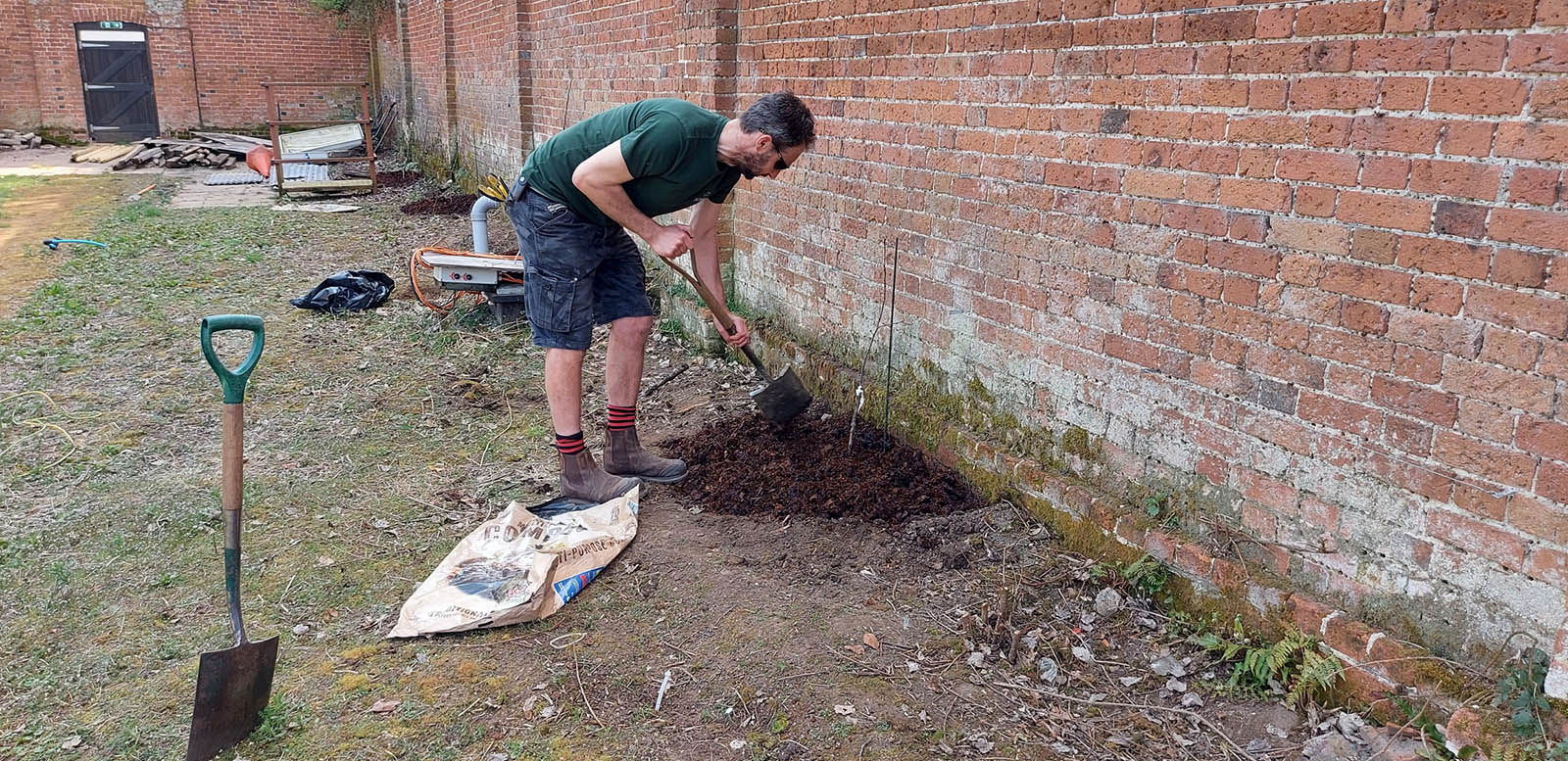
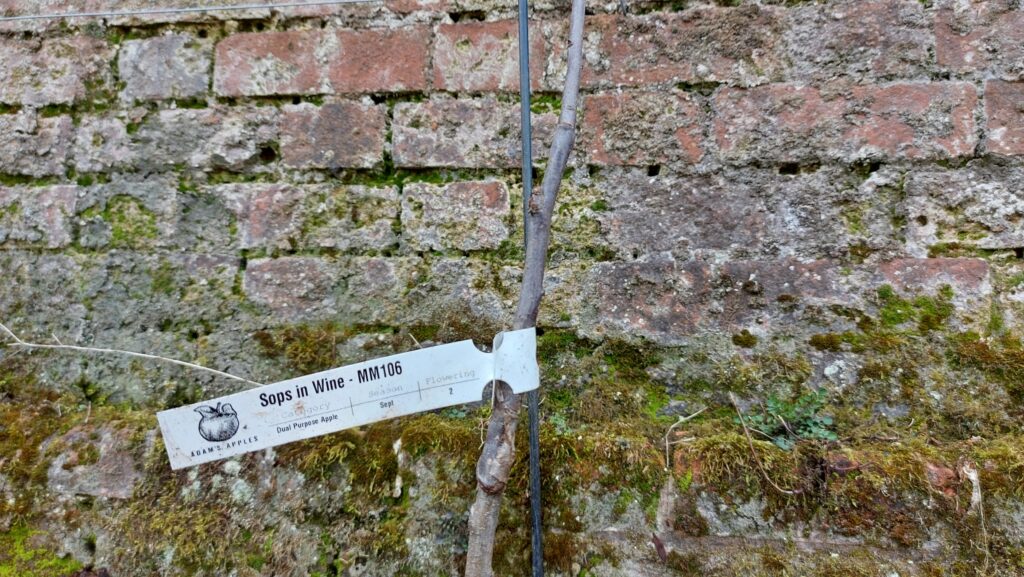
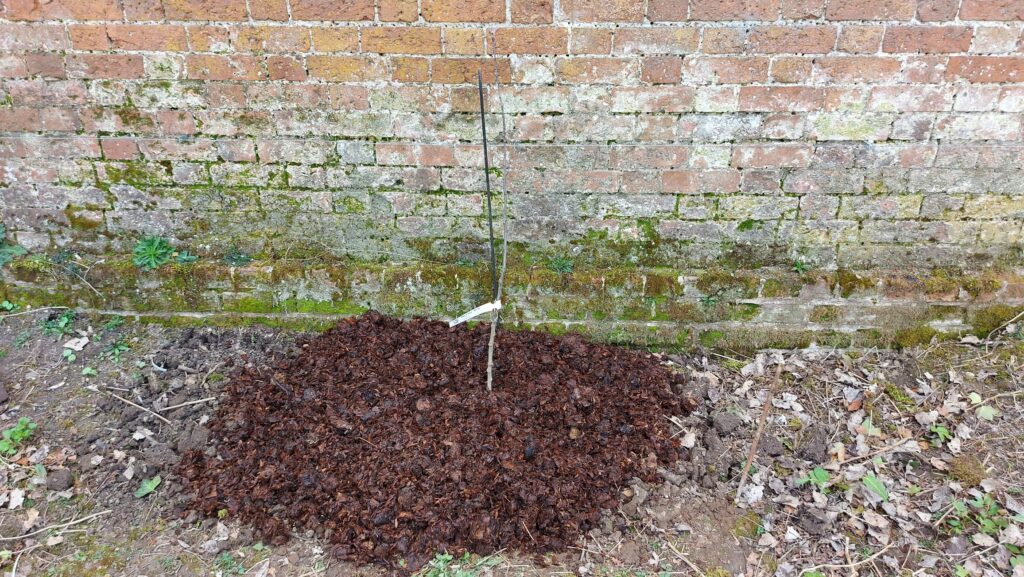
Ever since the Concerto Weddings Company left the Walled Garden in 2020, Painshill Park Trust have been keen to restore it to its 18th century splendour. In Charles Hamilton’s era, which the Painshill Park Trust aims to replicate, the walls of the Walled Garden were planted with fruit trees.
Thanks to support from Stanley Smith (UK) Horticultural Trust, we have been able to plant 30 trees in this incredible space.
The landscape team planting in the Walled Garden
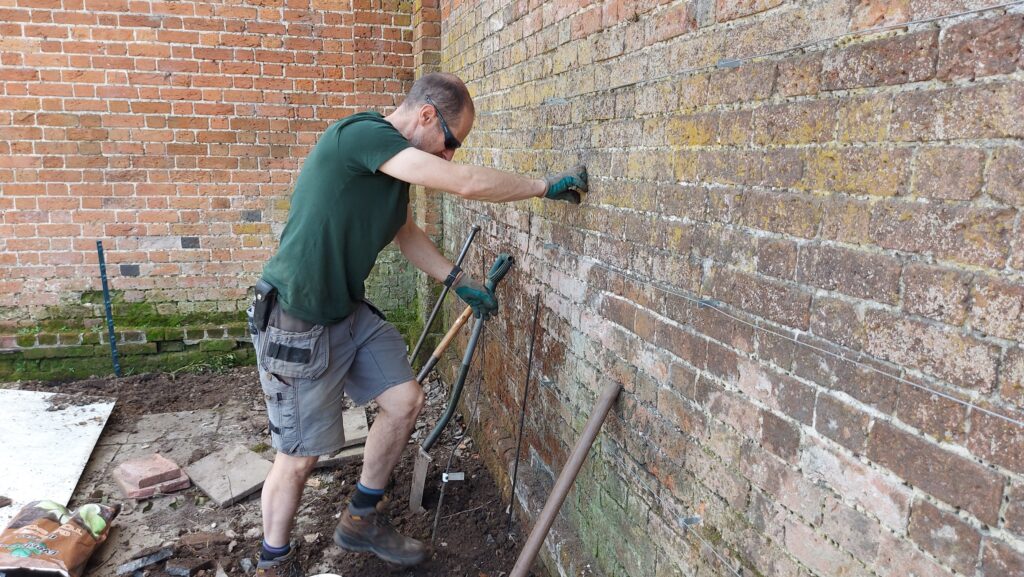
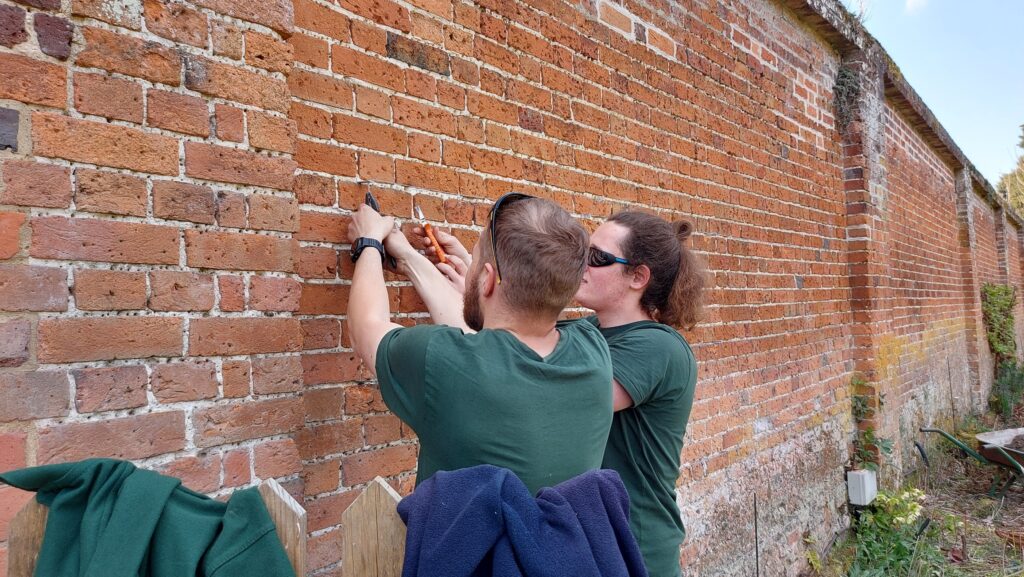
The walls show the alcoves and inlets that are perfect for growing, with an overhang to protect from frost and columns to enclose the tree. The walls, which were built in the 1750’s, are littered with holes where various supports have been attached over the years.
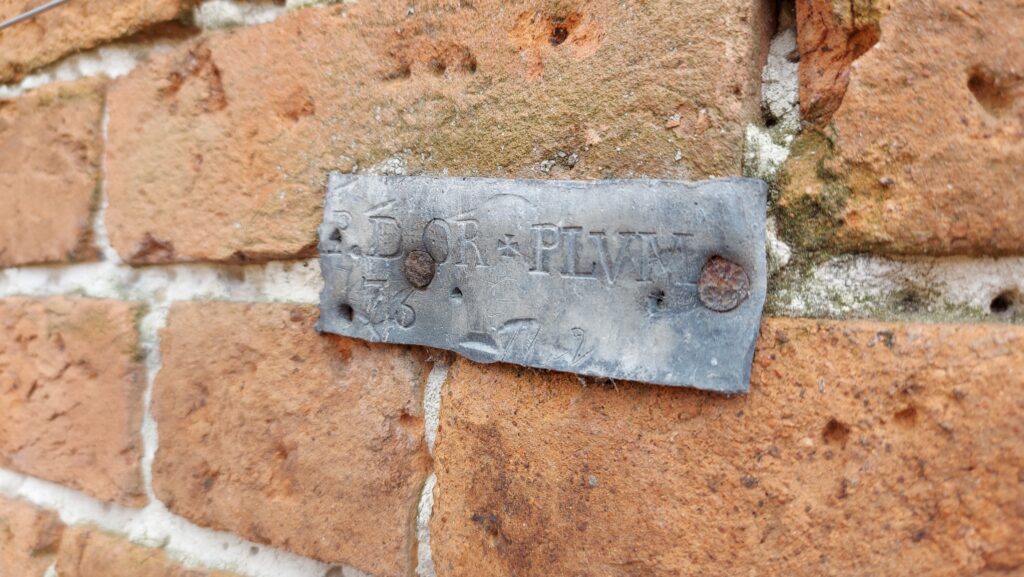
A plant label in the wall dating from the 1730s
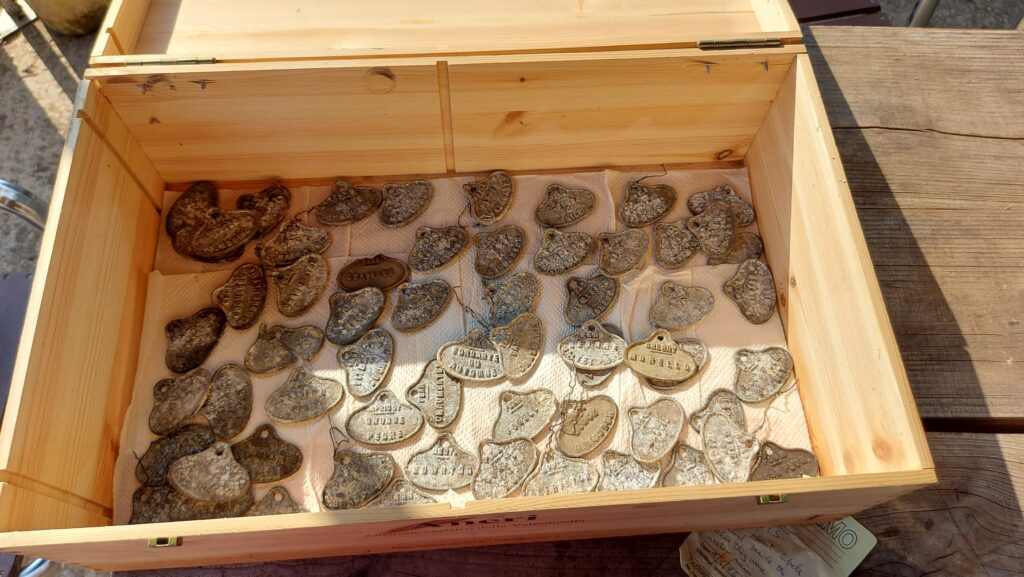
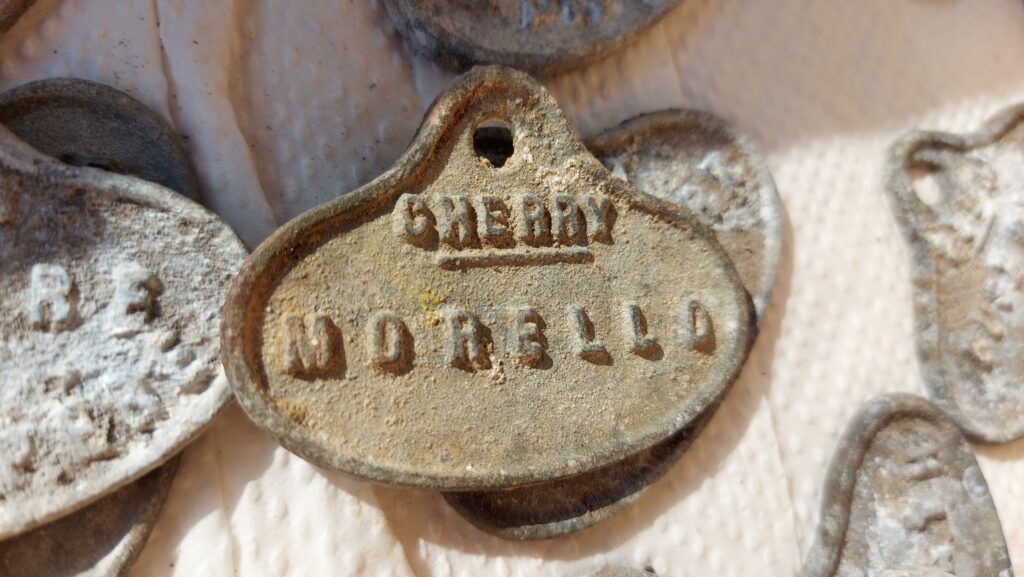
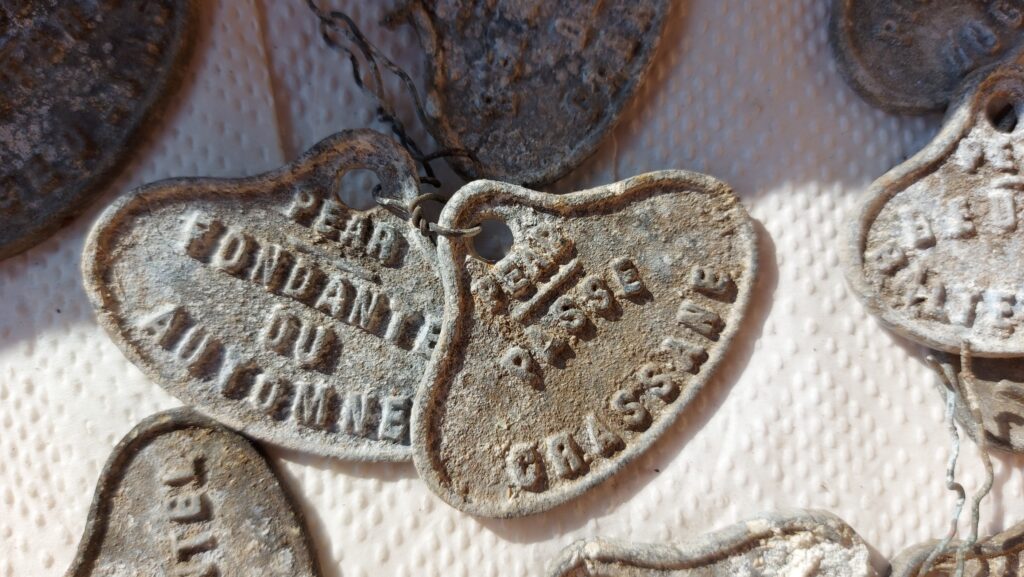
We have a good indication of what has been grown against the walls as we have some of the original 18th century labels still attached to the walls. Whilst cultivating the beds we have dug up a number of the original Victorian labels which have the most fantastic names such as Pear “Chaumontel”, Plum “Kirke’s Blue” & Pear “Glou Morceau”.
Victorian plant labels
A large number of apple varieties have been planted including Blenheim Orange, Ellison’s Orange & Beauty of Bath.
Against the South facing wall we intend to plant Peaches, Nectarines and Apricots to take advantage of the sun all day long.
Mirabelle plums have been planted against the North facing wall.
The Walled Garden is currently not open to visitors while we undertake the task of restoring it. However, it can be easily viewed via the Kitchen Garden, which is open daily and found at the entrance of Painshill.
We also use our Walled Garden for summer events. Why not bring along a picnic and enjoy outdoor theatre or comedy in the garden this season.
We are very grateful to Charitable Trusts like the Stanley Smith (UK) Horticultural Trust as their support is enabling us to continue vital restoration at Painshill. If you would like to make a donation, you can find out about our latest project. To support through a Trust or grant making committee please email fundraising@painshill.co.uk.
Live music will rock Painshill this summer as a series of world-renowned tribute and cover bands bring a fantastic festival vibe to our stunning gardens.
Rick Parfitt Jr, motor racing driver and son of legendary Status Quo rhythm guitarist Rick Parfitt, is just one of the names featuring at Painshill’s Live Music Lates through June and July.
Music from the greats comes courtesy of some of the world’s finest tribute bands, including The Bon Jovi Experience, The Trembling Wilburys and Zinc Floyd, and cover bands will bring the biggest hits from everyone from The Jam and The Who to Madness and Oasis.
Painshill’s Live Music Lates will run from 5.30pm – 9pm, giving visitors the chance to walk through the stunning historic landscape and watch the sun lowering over the lake before taking a seat in the tree-lined amphitheatre for 7pm.
Vintage food trucks will be serving delicious local produce, from buttermilk fried chicken and duck confit to authentic Greek food and woodfired pizza, and drinks will be available from stylish mobile bar Corks Occasions.