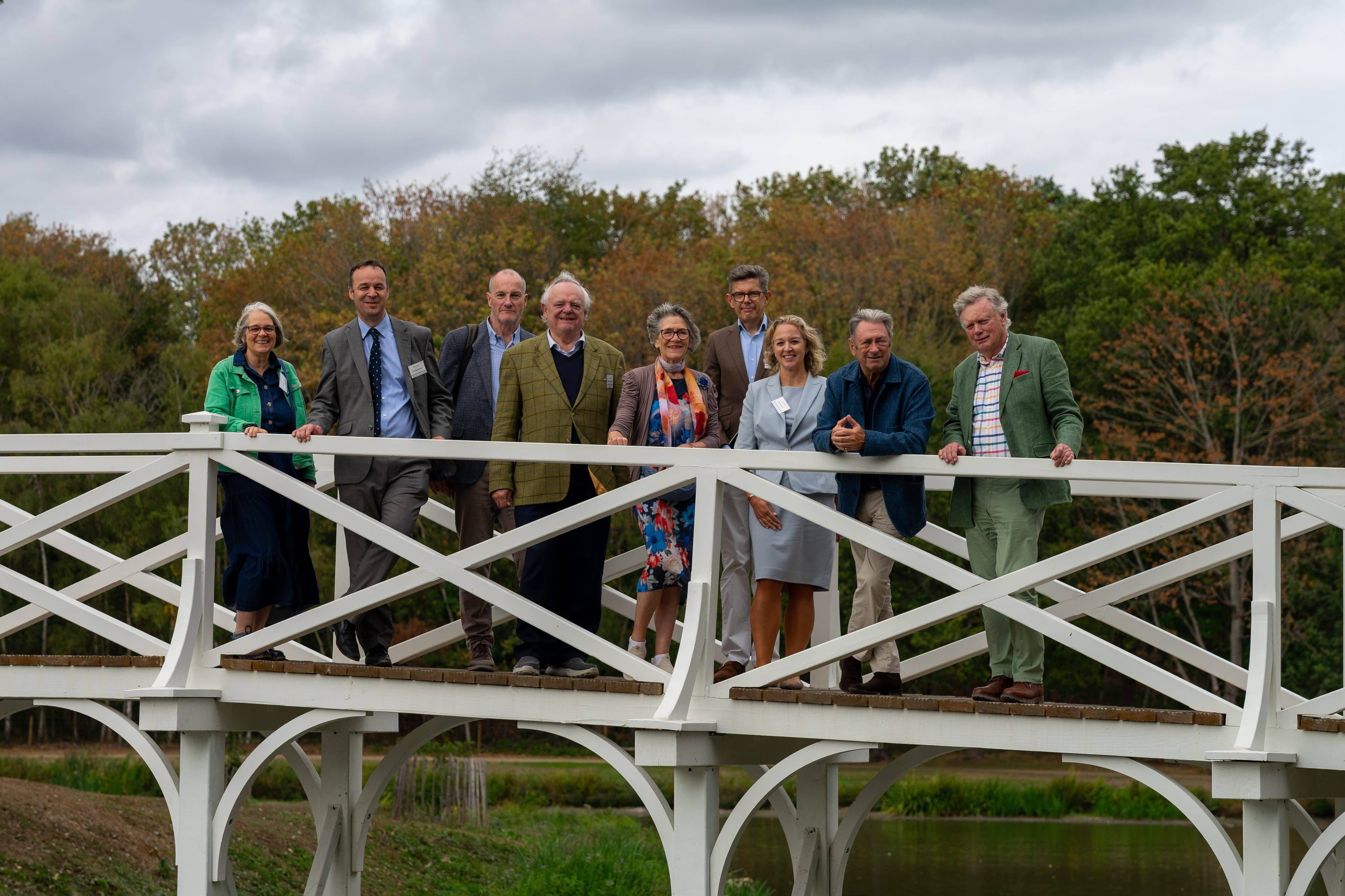
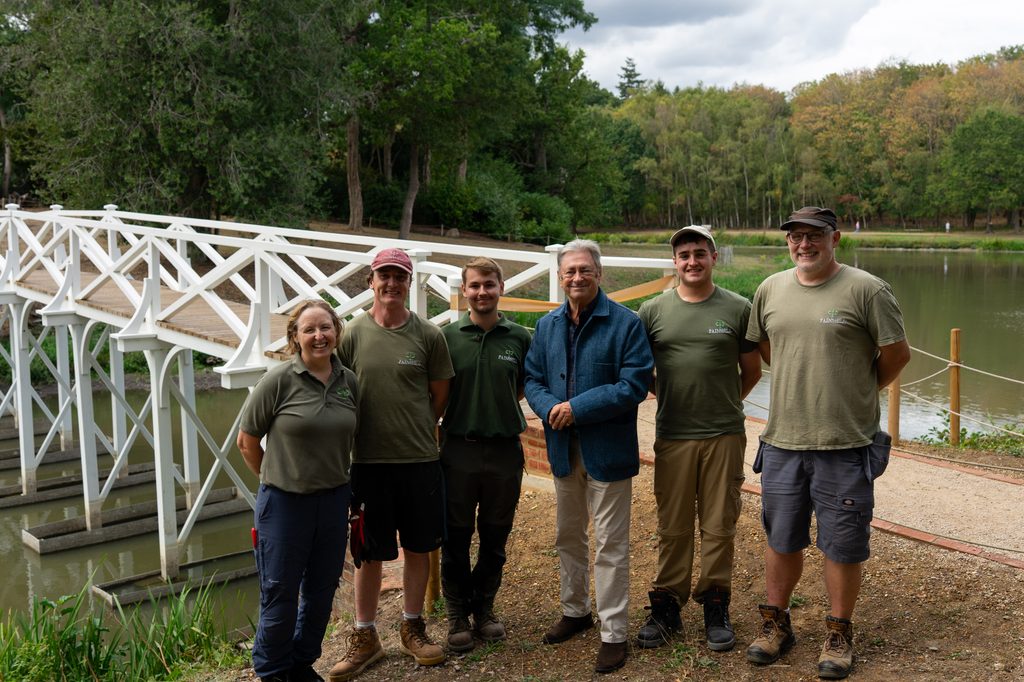
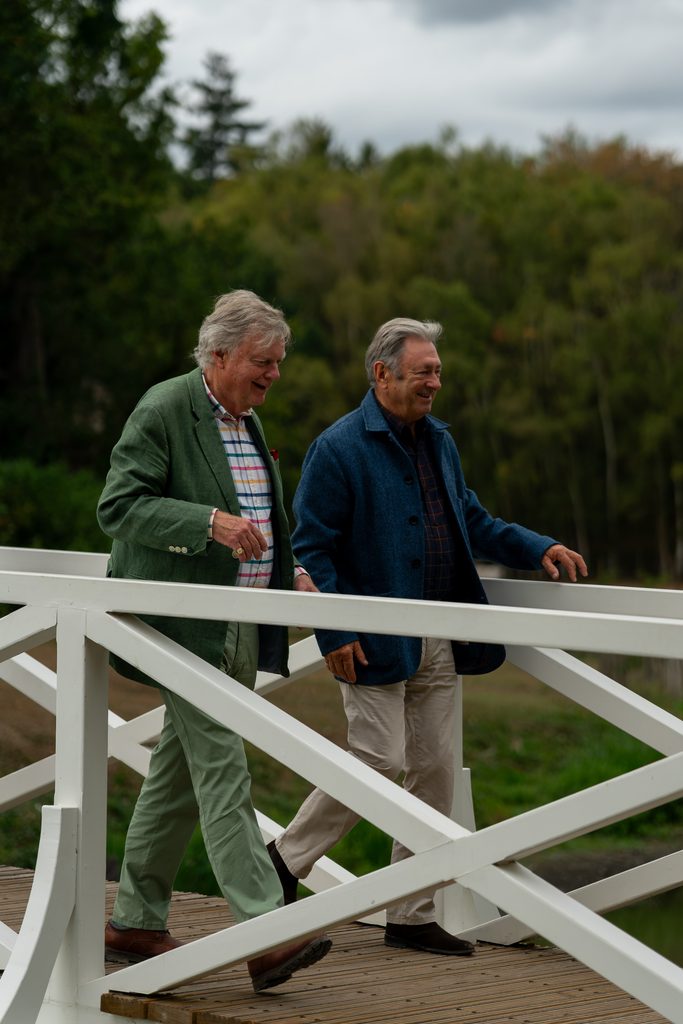
There was a real sense of celebration at Painshill as visitors, supporters, volunteers and members of the local community gathered to witness the official reopening of the historic Chinese Bridge. The occasion marked the culmination of years of planning, fundraising and skilled craftsmanship, restoring a landmark that has been at the heart of Charles Hamilton’s landscape.
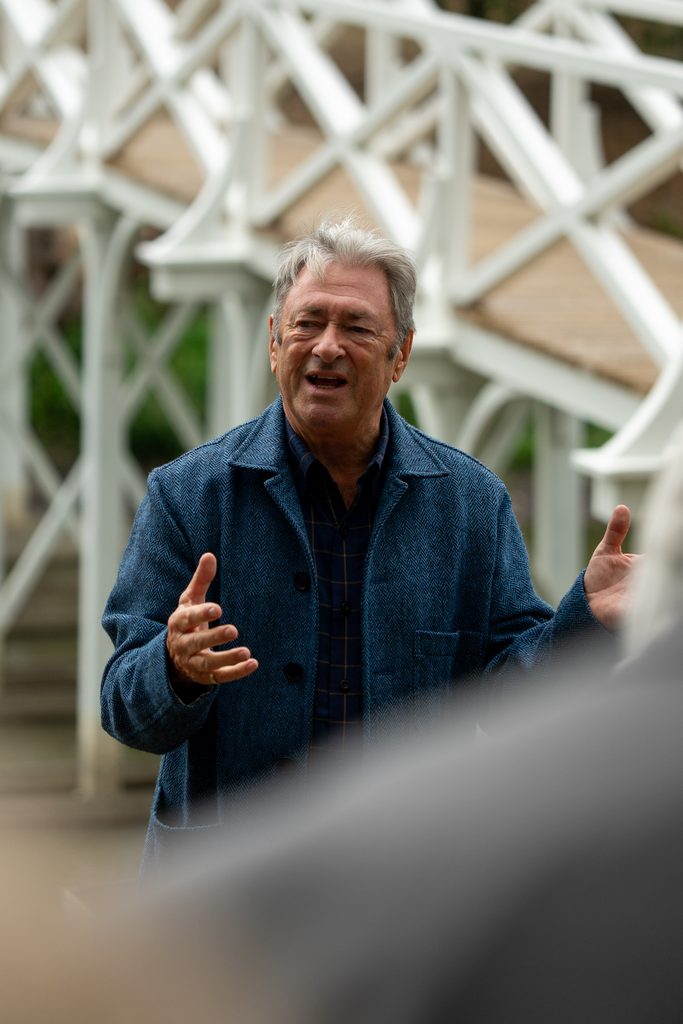
The ceremony was led by Alan Titchmarsh, renowned gardener, broadcaster and Patron of the Painshill Park Trust. Welcoming guests beside the lake, Titchmarsh spoke about the importance of preserving Britain’s historic gardens—not simply as beautiful places to visit, but as living works of art that connect people with history, nature and design.
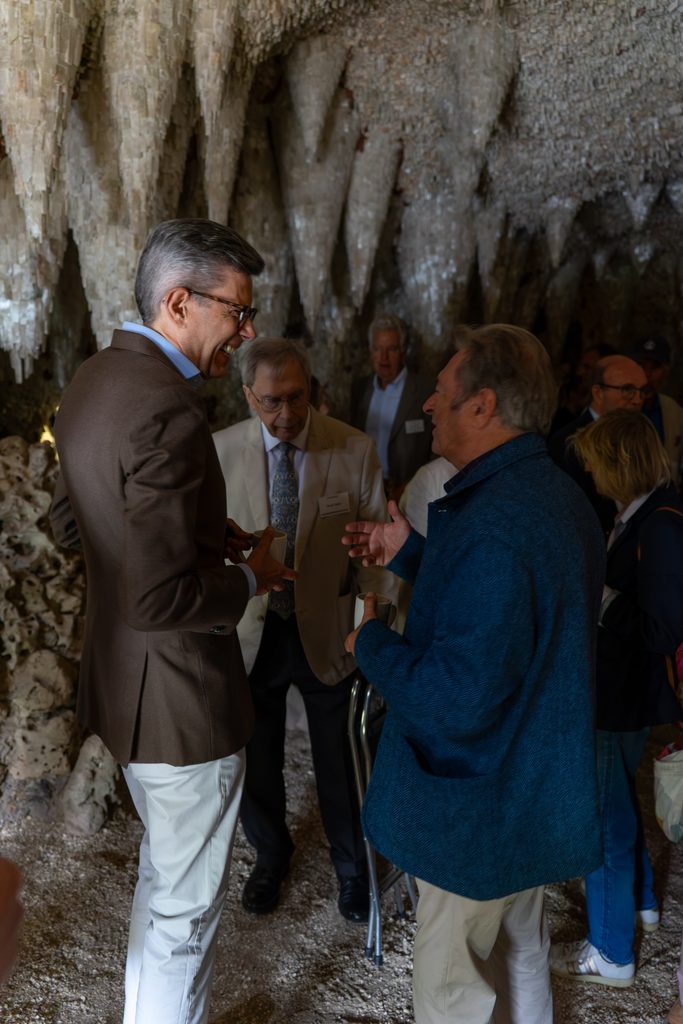
The reopening was designed as a celebration of everyone who made the project possible. Trustees, donors and local councillors came together to see the bridge returned to its rightful place within the landscape.
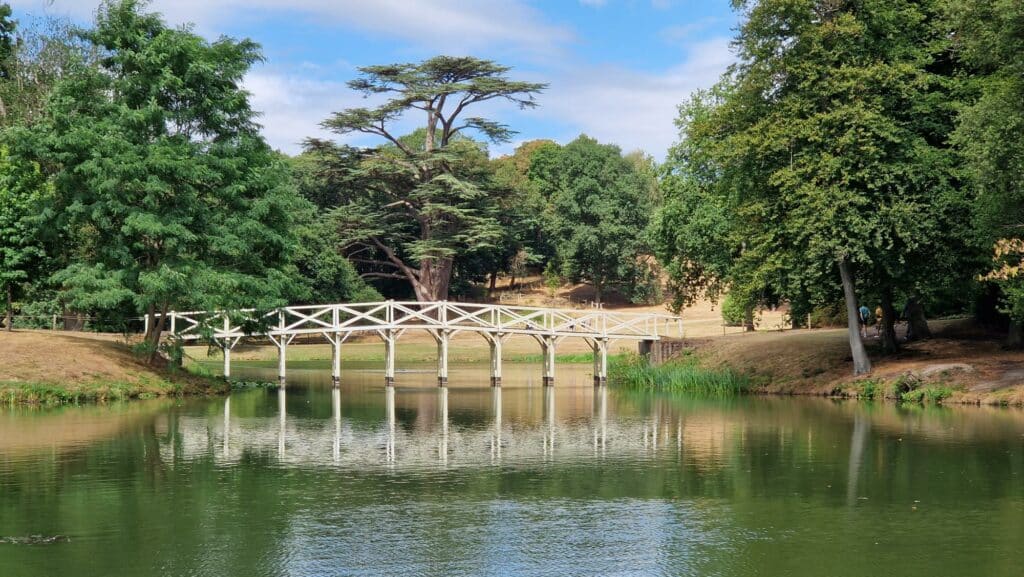
As Titchmarsh officially declared the bridge open, applause echoed across the lake and guests crossed the elegant timber structure towards Grotto Island, recreating the journey that Charles Hamilton intended in the 18th century. The completed bridge faithfully reflects the historic design while incorporating modern engineering to ensure its longevity, demonstrating how heritage conservation can honour the past while preparing for the future.
The Chinese Bridge is one of Painshill’s most photographed and recognisable features, framing beautiful views across the Serpentine Lake and providing the gateway to the Crystal Grotto. With the bridge now reopened, visitors can once again experience Hamilton’s landscape as it was conceived: a sequence of carefully composed vistas, follies and moments of surprise linked together by graceful pathways and crossings.
Alan Titchmarsh’s presence made the occasion especially fitting, celebrating not only the restoration of a beautiful structure, but the shared commitment to safeguarding Painshill’s extraordinary heritage for generations to come.
What a wonderful day we had at Painshill for Heritage Open Day!
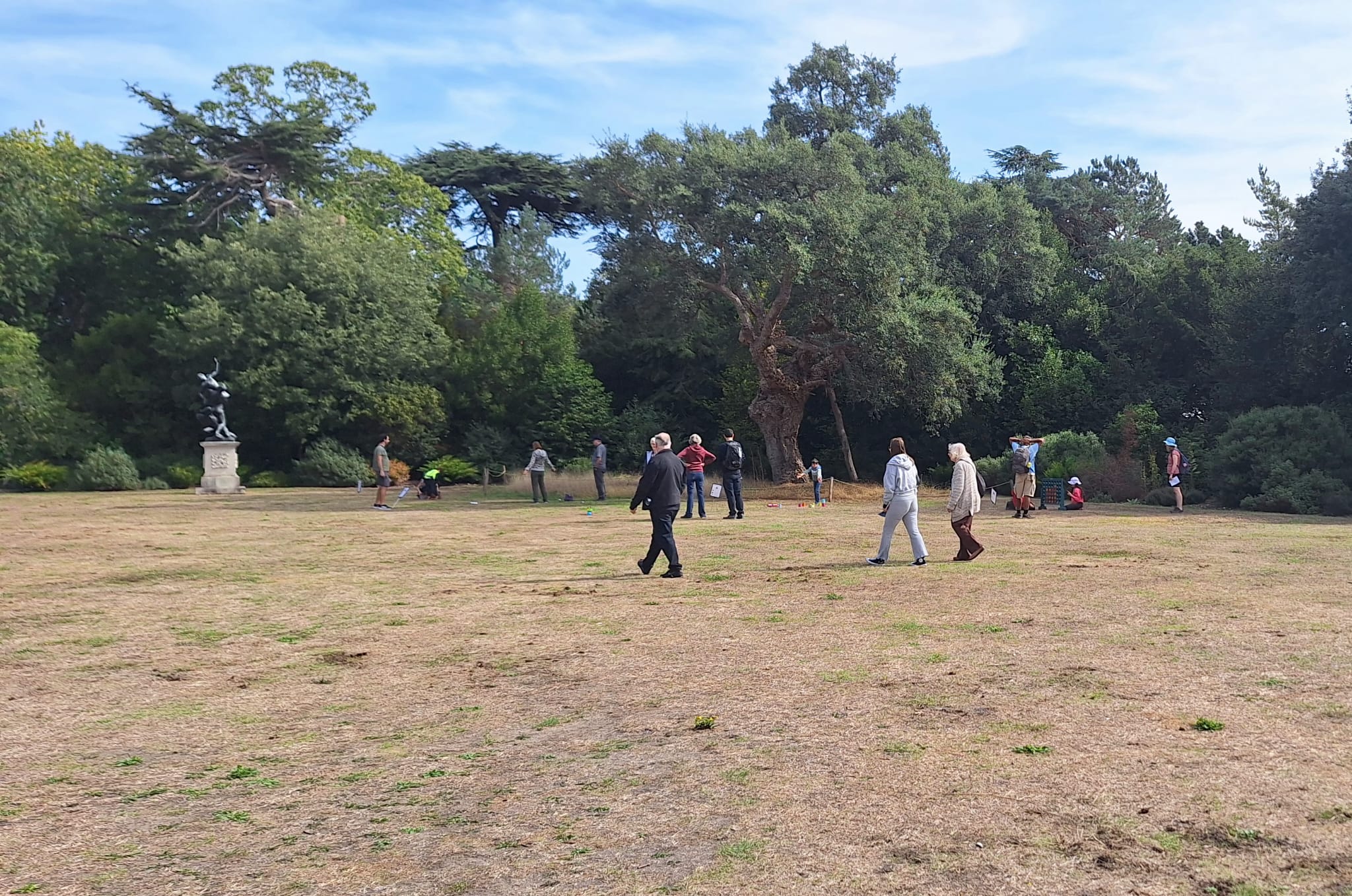
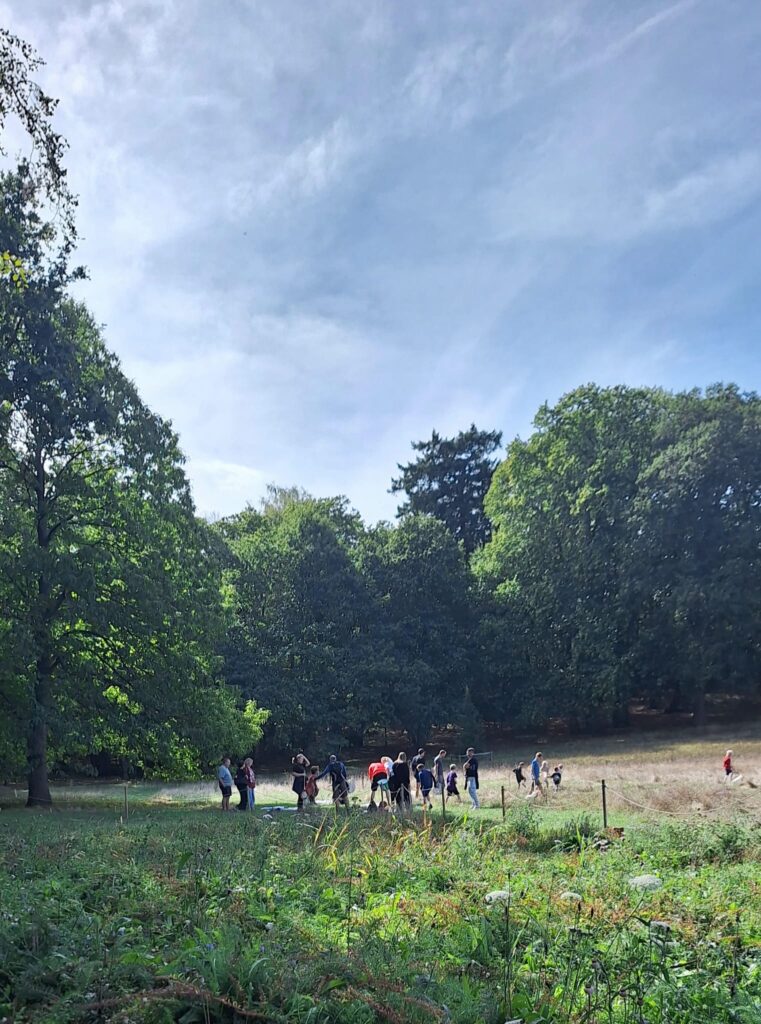
On the 20th of September, we opened our gates for a special day celebrating the history, stories and people that make Painshill such a special place. It was wonderful to see so many familiar faces, as well as lots of new visitors, enjoying the landscape and making the most of everything the day had to offer.
From exploring our beautiful 18th century landscape and discovering our famous follies, to enjoying the games, activities and stalls around the grounds, and simply spending time together in the garden, there was such a lovely atmosphere throughout the day.
Heritage Open Day would not have been possible without the wonderful people who helped bring the day to life. A very special thank you to our amazing volunteers, who gave their time, energy and enthusiasm to welcome visitors, run activities and share their knowledge throughout the day. Your support makes such a difference, and we are incredibly grateful for everything that you do.
Thank you also to our team, vendors, partners and everyone who helped with the planning and preparation. From setting up activities to making sure everything ran smoothly on the day, there was a huge amount of work happening behind the scenes, and we couldn’t have done it without you.
Most importantly, thank you to everyone who came along and celebrated with us. Seeing the garden full of families, friends, laughter and people discovering something new was a wonderful reminder of why sharing our heritage with our visitors and local community is so important to us.
We hope you enjoyed your day at Painshill as much as we enjoyed welcoming you.
Until next time, thank you for helping us celebrate the history, landscape and stories of Painshill. We look forward to welcoming you back to Painshill soon.
The Painshill Park Trust is pleased to announce the appointment of Huw Davies as Chief Executive Officer of Painshill Park. Huw will take up his appointment on 1 October 2026.
Huw joins Painshill following 11 years as Deputy Managing Director and Business Development Director of the Royal Philharmonic Orchestra, where he played a leading role in the organisation’s strategic development, audience growth, fundraising, partnerships and commercial activities. He brings extensive experience of leading and developing cultural organisations, building strong relationships with a wide range of stakeholders, and creating sustainable models for growth.
Sir Stephen Lamport GCVO DL, Chairman of the Painshill Park Trust, said:
“We are delighted to welcome Huw Davies as our new Chief Executive Officer. Huw has a clear understanding of Painshill’s unique qualities and of the opportunities ahead, as well as a compelling vision for its future. I and my fellow Trustees very much look forward to working with Huw as we embark on the next important chapter in Painshill’s almost 300-year history.”
“At the same time I wish to thank Painshill’s former Director, Gary Topp, and to convey thanks to Joint Interim Directors, Hannah Liles and Louise Webb.”
Huw Davies said:
“I am thrilled to be joining Painshill at such an exciting point in its history. Painshill is an extraordinary place, and one with enormous potential to reach and inspire even more people. My ambition is to build its profile, strengthen its financial resilience and deepen its impact, while protecting the integrity and character of this remarkable landscape garden for future generations.”
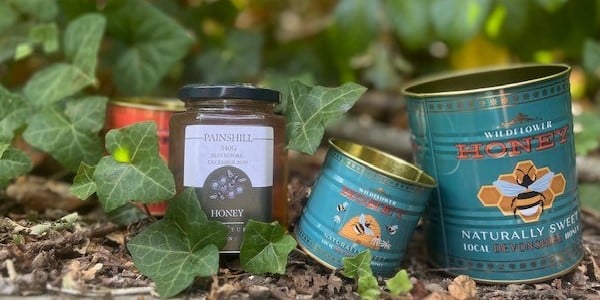
We have recently welcomed back one of Painshill’s most popular products: delightfully sweet, golden honey produced by our very own bees. Neither the bees nor the honey are new to Painshill. I recently had the opportunity to speak to one of Painshill’s current beekeepers: Marion Cooper. Marion and her husband Geoff have been caring for the bees at Painshill for thirty years. In that time, they have seen vast changes to the landscape and the very nature of beekeeping. It’s more challenging now than it used to be; the bees require more attention and protection from the ecological changes of the modern world. Habitat loss, the arrival of new pests and diseases, and environmental contamination significantly impact bee welfare and make the work of beekeepers like Geoff and Marion more essential than ever.
Geoff and Marion use their expert knowledge to monitor the health and behaviour of our bee colonies; they also ensure that adequate food stores are available. This is particularly important when harsh weather conditions make it impossible for the bees to forage for themselves. The honey at Painshill has a deliciously complex taste and colour that changes with the seasons. This is due to the fabulous variety of flowers and trees. The bees collect nectar and pollen from all of these plants, as well as Painshill’s unique vineyard. They transport the nectar back to their comb and begin the process of converting it into honey. They inject the nectar with enzymes and flap their wings vigorously until the water content has reduced to less than 20%. At this point, the bees secure the honey with a wax seal, ready for collection!
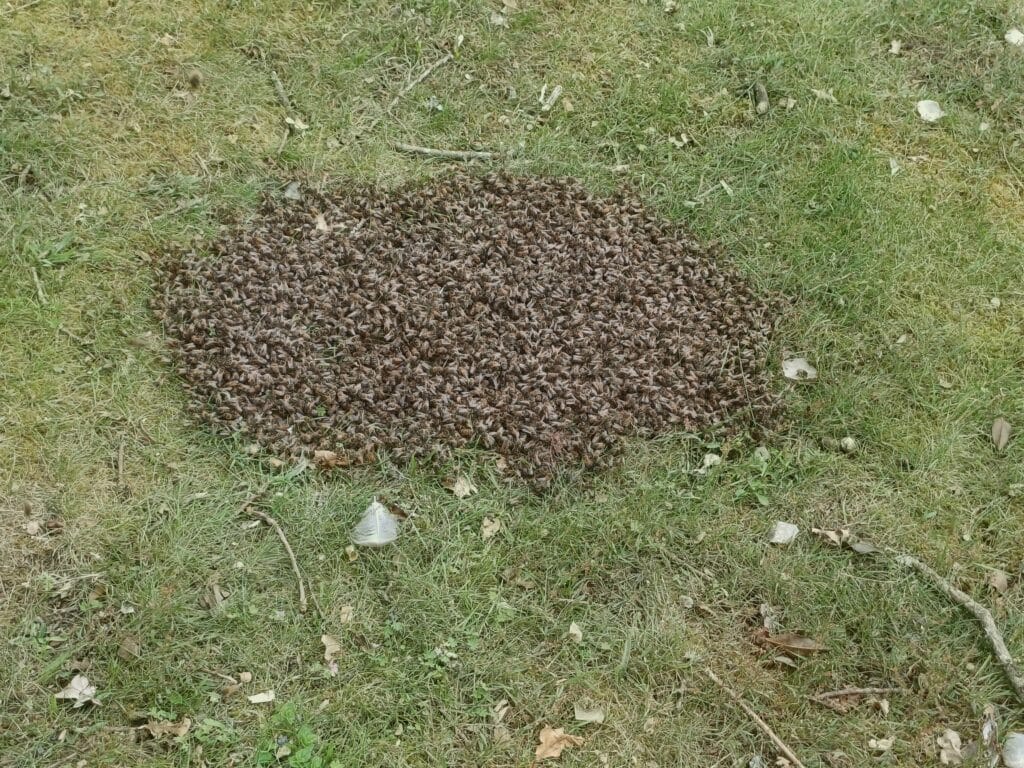
Recently, I saw Geoff and Marion at work. An unusual bee swarm was reported on Grotto Island near the Chinese Bridge. Bee swarms typically occur when a hive has become overcrowded and a section of the population splits off to start a new one. Curiously, these bees had swarmed on the ground rather than a bush or tree. After inspection, Marion and Geoff discovered that the bees were not part of Painshill’s hive but that they needed rescuing. The reason the bees had formed a ground swarm was likely due to an injured queen and if the queen couldn’t move, neither would the two thousand other bees. Our beekeepers raced to Painshill to start the rescue mission. Soon, I found myself wearing a full beekeeping suit alongside Marion and Geoff. Due to the unconventional nature of the swarm, we were lucky to have the combined knowledge and experience of the couple. They set a cardboard box on top of the bees (the reverse of usual procedures) propped up with twigs. The bees were very calm and slowly made their way into the box with a little help from Geoff’s hive smoker. When the bees were ready, a sheet was slid underneath the box and the bees were bundled up, ready to be taken to their new home. Geoff and Marion managed to rescue almost all of the approximately two thousand bees. It was an incredible experience that demonstrated the care and innovation required of dedicated beekeepers.
The bee swarm on grotto island
Although Geoff and Marion have been caring for the bees since the mid-nineties, the history of beekeeping at Painshill stretches even further back. Marion kindly shared an article that she’s preserved from July 1986. The paper has yellowed over time, but there is a clear picture of Joan Harborne smiling through the mesh netting of her beekeeping headwear. Before the apiary was set up on Painshill Park land, Joan looked after bees at the neighbouring Belfry House. The apiary there had been built by owner Leslie Coldwell, who eventually entrusted the beekeeping to Joan. The article reported that the bees foraged on the acacia and lime trees growing at Painshill. At the time, Painshill visitors drove through what is now the staff entrance and were greeted by volunteers at two huts. One sold tickets, the other sold Painshill’s delicious honey.
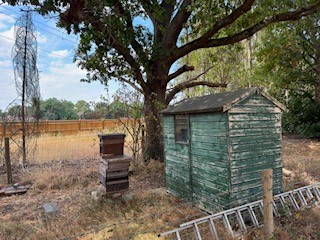
The beehives at Painshill
It seemed Joan enjoyed sharing the secrets of her trade. She advised that the biggest mistake when caring for bees is fear. Fear, Joan believed, leads to sweat, and sweat makes the bees more likely to sting. Whether or not this theory was scientific, it seemed to work for Joan, who would regularly place her bare hands into the hive. Joan also revealed that the reason beekeepers puff smoke over their hives is to stop the bees from stinging. The bees assume the smoke is a forest fire, which encourages them to eat as much as they can before their supplies burn. Like all of us, once the bees have a full stomach, they become happy and calm, and much less likely to sting.
Eventually, the apiary was passed on from Joan Harborne to Peter Hartt and finally to Marion and Geoff. For the first time, the bees and their apiary were moved onto Painshill’s land; it still stands today on the edge of Painshill’s northern boundary, up the slope and beyond the Keyhole Plantation. Marion and Geoff have looked after the bees at this spot for thirty years, providing fabulously tasty honey for our shop. At the end of this year, they intend to pass the hives on to another experienced beekeeper.
There are moments in nature that make us stop in our tracks. A solar eclipse is one of them.
Last night, our members had the chance to experience this extraordinary event surrounded by the beauty of our historic landscape. The clear skies and beautiful vantage points offered the members the perfect setting to pause, look upwards and experience this extraordinary moment together. As the moon began its journey to cross in front of the sun, Painshill felt as enchanting as ever — only this time, the spectacle was written across the sky.
And for a moment, everything seemed to slow down.
With the Gothic Temple and Turkish Tent providing the most popular backdrop, the eclipse became a shared experience. Conversations quietened as everyone looked skyward, while the changing light created an almost otherworldly feeling across Painshill. For a few precious moments, the landscape was transformed. The light became softer and strangely atmospheric, as though someone had turned down the brightness of the world. Reflections shimmered across the lake, the silhouettes of the Crystal Grotto and Temple of Bacchus became darker against the evening sky, and an air of excitement drifted through the landscape. Members paused underneath the Gothic Temple and beneath the trees, looking upwards and sharing in the wonder of something that happens only rarely and for a few fleeting moments, Painshill became a place between earth and sky — a place to wonder, reflect and feel part of something timeless.
And perhaps that is the real magic of an evening like this. It reminds us that extraordinary moments don’t always ask us to do more. Sometimes, they simply ask us to pause, notice and connect.
Events like this are a wonderful reminder that Painshill is more than a place to visit during the day. Our landscape has been inspiring people for centuries, and we love creating new opportunites for our visitors, members and local community to experience it in new and unexpected way.
Whether you came with family and friends, enjoyed the evening with fellow Painshill members, or simply wanted to witness this extraordinary celestial event somewhere special, we hope you enjoyed your time with us.
A huge thank you to everyone who joined us, we hope you’ll join us again for the next opportunity to see Painshill under the stars!
A huge thank you to James and his family for capturing this special moment at Painshill
Romance, rockeries, and a ruined temple…Meet the last lady of Painshill.
Painshill has countless mysteries hidden within the follies and the underexplored nooks of the landscape. However, the people who have lived and loved here also carry a myriad of secrets. Painshill’s most famous owner is, of course, its founder Charles Hamilton. But a vivacious woman named Ethel Combe was arguably the most complex. Ethel lived at Painshill for fifty years and oversaw its final chapter before it fell to ruin in the postwar era. Ethel was glamorous and wilful, leaving a lasting impression on the landscape and the wider Cobham community. In some ways, she was a controversial figure. Her adaptations at Painshill resulted in the ruin of two follies. Her romances were unconventional with significant age gaps, and, at times, she found herself a subject of gossip. However, as we shall see, the phrases engraved on the headstones of Ethel and her husband Charles reveal a shared sentiment: that immortality exists in remembrance. So perhaps Ethel would quite like to be remembered for her complexity and impact – these are, after all, the qualities that make her such an interesting figure. Up until now, very little has been written about Ethel, but with evidence gathered from the letters of poet Mathew Arnold, census records, marriage records, and indeed her own headstone, we can finally piece together an image of a charismatic and determined character.
Early Life and First Marriage
Alice Ethel Leonard (as she was known then) was born on the 7th of September 1863 to John William Leonard and Fanny Warren. Her father was a merchant in the East India Trading Company. Birth records show that she was born in Norwood, Lambeth, and on later records, she seems to pinpoint the spot to Gipsy Hill. This area derived its name from the large gypsy community that had long been established there. At the time of Ethel’s birth in the mid-19th century, Norwood was undergoing a massive transformation into a suburban community that was expedited by the development of the railway and the iconic Crystal Palace.
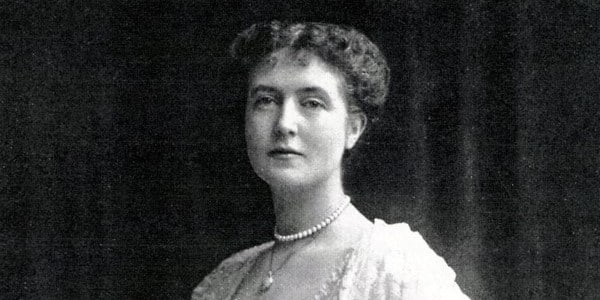
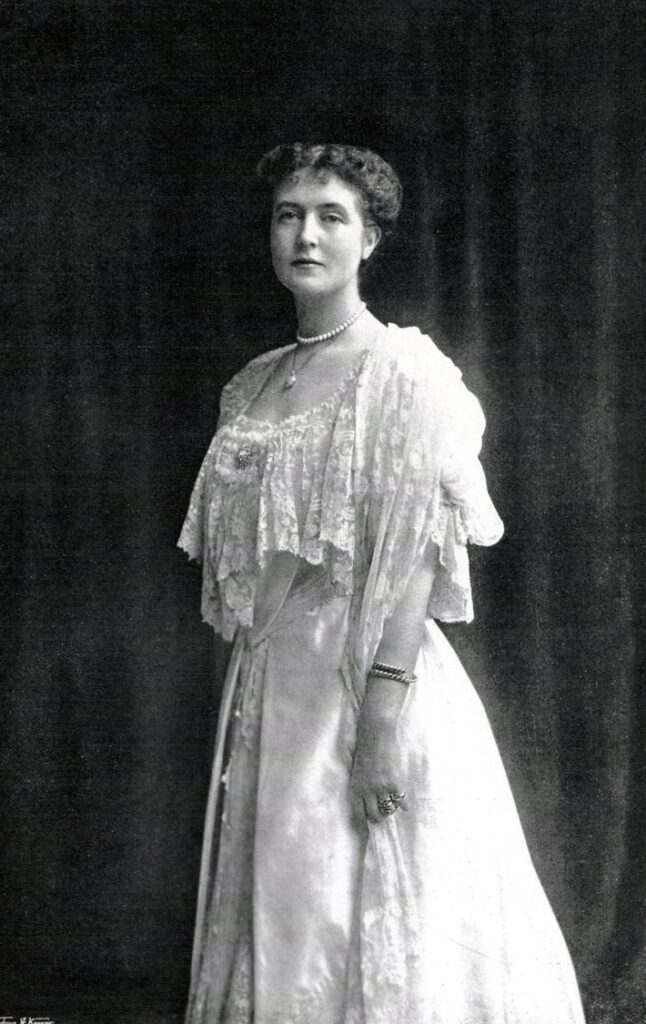
Alice Ethel Combe (1863-1942).
Although based in London, she seemed to have solidified herself as a vibrant character on Cobham’s social scene by age 24. As a gorgeous, young, unmarried woman, she was the talk of the village and featured several times in poet Matthew Arnold’s letters to his daughter. Whilst staying in Painshill Cottage, he wrote that everyone in the community agreed that Ethel was stunningly beautiful and commented that “she seems well disposed to enjoy it herself while it lasts.”
It seems that Ethel often found herself at the receiving end of equivocal remarks. She was undoubtedly an attractive and friendly young woman who easily appealed to the opposite sex. Matthew Arnold commented, rather harshly, in December 1887 that he did not think she dressed nor held herself particularly well and yet men still flocked to her. He also noted that Percy Combe danced with her the entire evening, a gentleman who was the son of Charles Combe (Ethel’s future husband). The attention Ethel drew seems to have been sadly accompanied by judgement from the restrained Victorian society of her youth.
Ethel and her family had been staying at Painshill in the winter of 1887 as guests of the new owner, Alexander Cushney. Alexander was a merchant in Shanghai, suggesting that a friendship had been formed between himself and Ethel’s father based on their mutual profession. Alexander and Ethel were an unlikely pair. He was forty years her senior and when their engagement was announced in March 1888, it was met with “disgust and horror” according to Matthew Arnold, although he added that he personally supported the union.
Ethel and Alexander enjoyed a Spring wedding on the 25th of April in St. John’s Wood, Westminster. Her parents served as witnesses and the marriage record reveals that the couple were neighbours on Abbey Road at the time of the wedding. It seems that aside from Painshill, Alexander enjoyed a London residence. Records reveal that Alexander was aged 65 and widowed, having lost his first wife, Isabella Bisset in 1885. Ethel was only 24, making her a similar age to Alexander’s sons. We cannot know for certain whether they married for love or convenience, but as the years flitted by, Ethel once again found herself at the centre of village gossip.
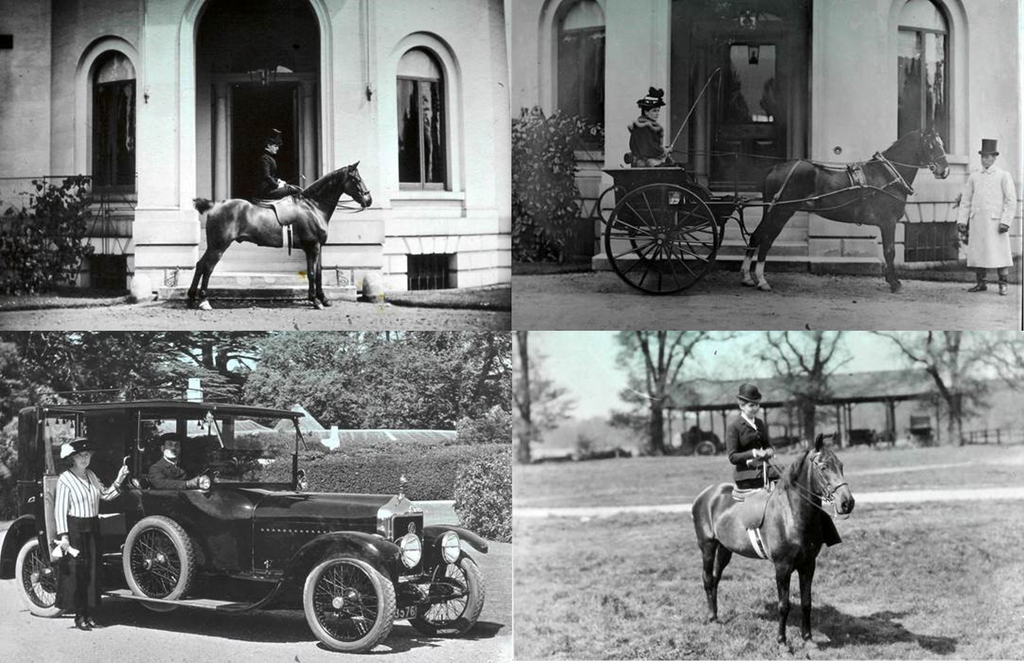
Ethel lived in an era of significant transportational change. In her youth, she would’ve travelled entirely by horses and carriages before swapping to cars in her later years.
Marriage to Charles Combe
While at Painshill, the Cushneys were neighbours with the Combe family. In the late 19th century, Charles Combe was the head of this influential family and owner of the Cobham Park Estate. Charles was worldly and fascinating – he had spent a large portion of his youth in France and had travelled the globe during an exciting stint in the army. In 1900, he lost his beloved wife Marianne to scarlet fever. For Charles, this loss seemed insurmountable and he regularly broke down in tears. Sometime after Marianne’s death, Charles began to develop a close friendship with Ethel. Much to the shock of the local community, he would visit her at Painshill while her husband was away. These visits became increasingly frequent and eventually Charles’s family felt compelled to make their disapproval known. Letters reveal that Charles’s daughter, Florence, explicitly told him that the visits with Ethel were causing upset and she pleaded with him to stay away from Painshill. Not only did Charles refuse, but he told his daughter outright that if she continued to disrespect Ethel, he would cast her out of the family home.
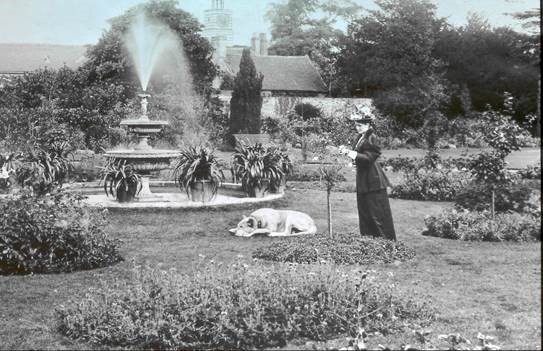
Ethel in the rose garden.
Whether Alexander Cushney knew that these visits were occurring and what he thought of them is difficult to say, but in July 1903 he passed away at Painshill, aged 80. Charles and Ethel waited three and a half years to marry after Alexander’s death. They wed at Marylebone Church on the 29th of December 1906. The marriage registry does not list their ages, but simply describes them as being of ‘full age’. Ethel would have been 43 and Charles 70 at the time of their marriage.
In the years since Alexander’s death, Ethel had desperately missed Painshill and urged Charles to buy the estate. He agreed and soon Ethel found herself living in Painshill House once again. In her time away, it appears Ethel had been planning – deciding how to modernise and adapt the landscape to her taste. Ethel had returned as Painshill’s mistress for the second time, older and with greater authority.
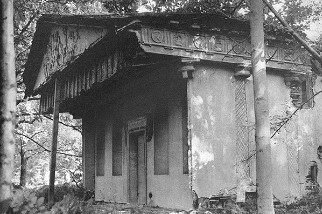
Ethel removed the columns and frieze from the Temple of Bacchus to build a classical loggia on the front of Painshill House.
Adaptation of the Follies
In 1907, Ethel took the rocks from Hamilton’s Cascade and used them to build her own rockery where the overgrown vineyard had been. The vineyard hadn’t been cared for in a century and so perhaps Ethel thought she was giving Painshill’s south-facing slope a new lease on life. Rockeries were incredibly popular in the Edwardian era and she repurposed the cascade rocks to create steps that led the visitor downwards through a garden of alpine plants.
Ethel’s changes at Painshill extended beyond the aesthetic. To adapt to the financial demands of the 20th century, she grew timber for sale as well as fresh fruit and vegetables in the Walled Gardens. This produce was sold at market, displaying innovation and financial savvy to overcome a tightening budget. Perhaps it was economic pressures that eventually led Ethel to make her most controversial decision at Painshill.
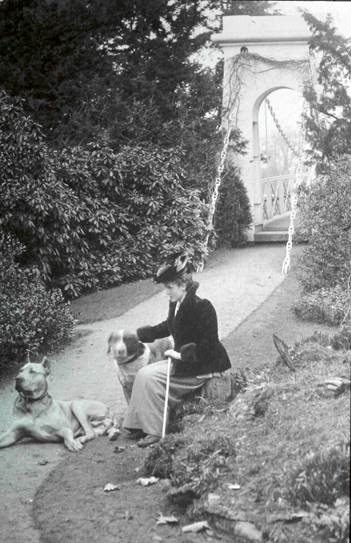
Ethel next to Painshill’s old suspension bridge.
When Charles Combe died in 1920, Ethel was widowed for the second and final time. On the census record, a year later, Ethel’s position had originally been listed as ‘widow’, but this was scratched out and replaced. ‘Head of the Household’ was the title most befitting Ethel Combe. In 1925, inspired by paintings of the original portico on Painshill House, Ethel created her own classical loggia at the front entrance. Instead of purchasing new materials to bring this vision to life, Ethel removed the columns and frieze from the Temple of Bacchus. The Temple, which had survived since the early 1760s was left in significant disrepair and eventually collapsed.
In hindsight, Ethel’s decisions were likely made as a result of the growing financial pressure on Britain’s upper class. The final, crushing blow arrived with the onset of World War II when Painshill was requisitioned for use by the Canadian Army. Ethel left her beloved Painshill and split her time between Munstead in Godalming, and Worthing, a coastal town in West Sussex. She died at Munstead on the 8th of October 1942, aged 79. Her effects were worth £81,253, which would equate to roughly £3.5 million today.
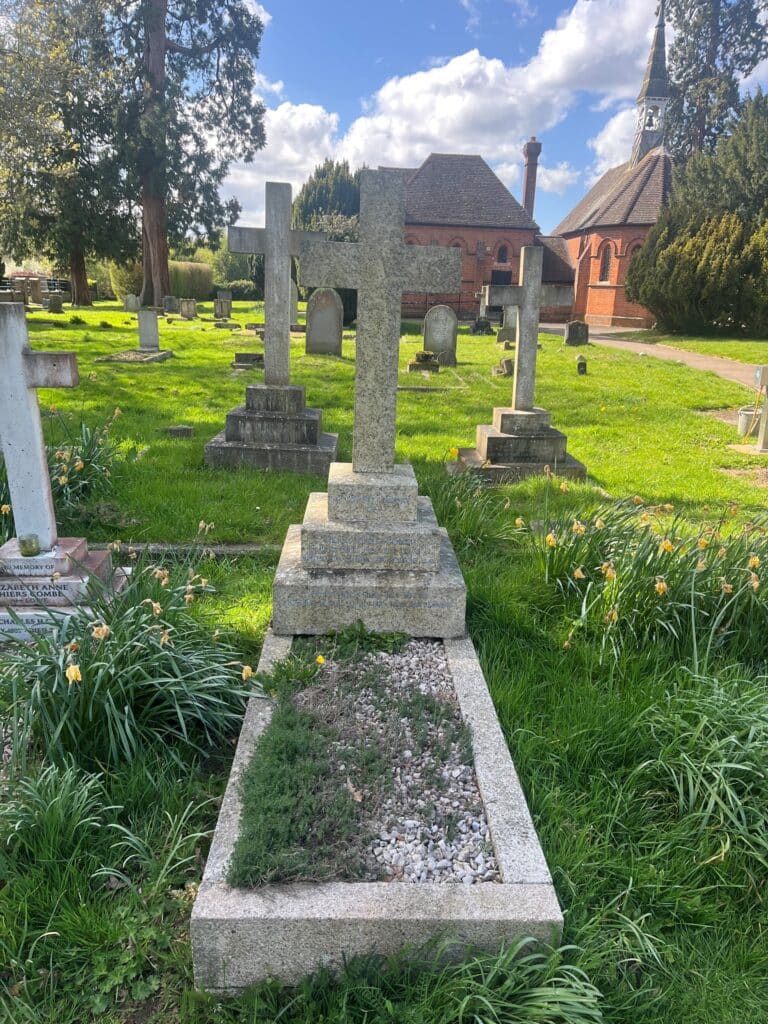
Ethel’s grave at Cobham Cemetery. It reads: In loving memory of Alice Ethel Combe who died Oct. 8th 1942. Widow of Charles Combe, J.P. Everything that has loved and has loved to the end will meet again.
Ethel’s obituary praised her legacy at Painshill and her work to support the local schools and village. She was buried in Cobham Cemetery. Engraved upon her headstone are the words ‘Everything that has loved and has loved to the end will meet again.’ Alone, this saying appears to be a beautiful sentiment about meeting loved ones in the afterlife. However, this phrase was the second half of a longer one by Giuseppe Mazzini, a revolutionary who fought for Italian unification. The first half of the saying can be found on Charles Combe’s grave: ‘There is no death in the world except forgetfulness.’ The two halves of this speech unite the couple in death and remind us that if we remember loved ones, their legacy never dies.
In telling their story – the good and the bad – we can give Ethel and Charles the immortality that they longed for. Ethel’s story has never before been told in its entirety. This has looked to give her a voice and offer an insight into the life and mind of a vibrant, strong, innovative, and complex figure.
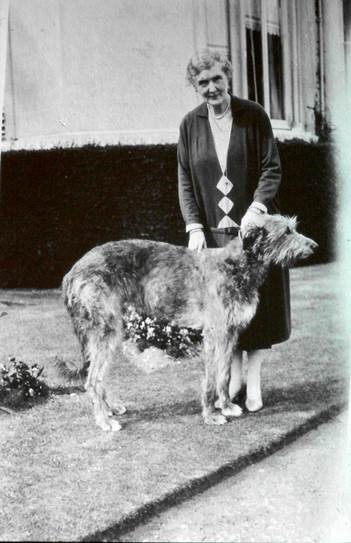
Ethel in her later years.
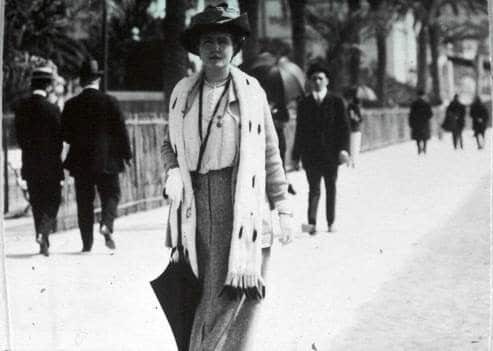
Ethel on holiday in Cannes.
Sources
Taylor, D. (2006). An Estate for All Seasons. Phillimore & Co.
Arnold, M. and Lang, C.Y. (2001). The Letters of Matthew Arnold: 1879-1884. University of Virginia Press.
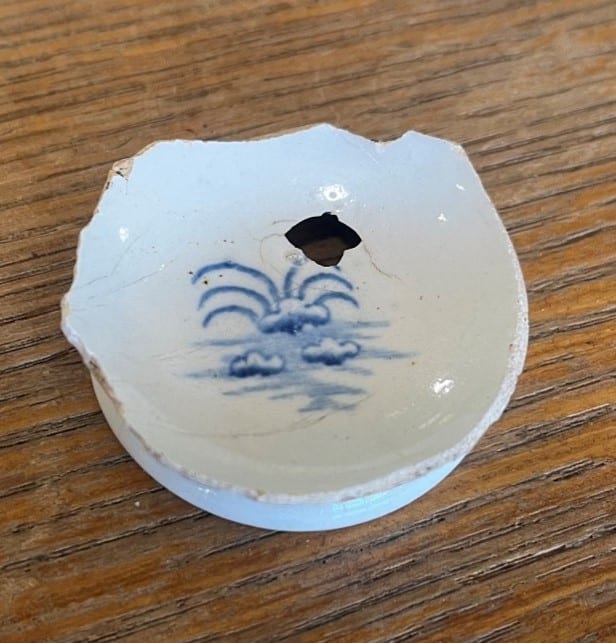
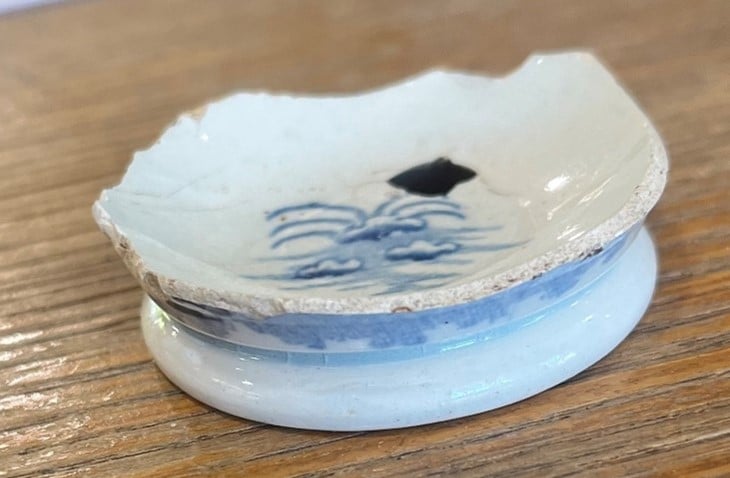
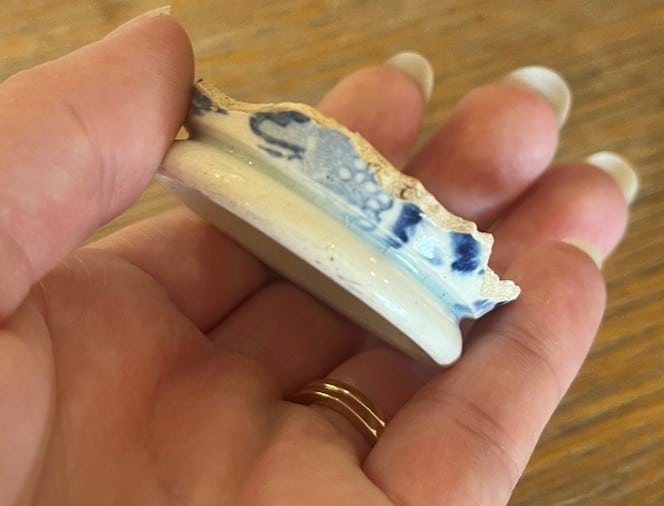
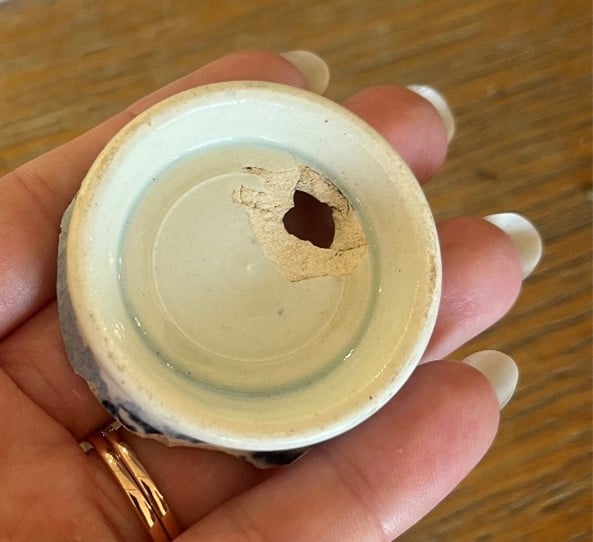
A curious new artefact has been discovered at Painshill. In April, the remnant of a porcelain cup or bowl was unearthed in a shallow spot beneath the yew trees on the western side of the lake. It is small and delicate, fitting nicely in the palm of the hand. And badly damaged – the top is missing and only a small section of the side curves up from the base. A hole perforates the bottom; a few millimetres lower and it would have destroyed the pretty image of three clouds. The decoration stands out, a beautiful shade of blue against a white background. It travels up the side of the bowl, but due to the significant damage, we can no longer discern the imagery.
The motifs resemble Edo or Meiji Japanese stylistic conventions which would date the piece to the 19th century. Symbols reflecting the natural world were popular. Clouds, oceans, and water sprays were typical of the seascapes depicted. This type of porcelain or Arita-Yaki, uses a technique called Sometsuke, which refers to the high contrast of cobalt blue underglaze on a sharp white background.
The lack of an origin mark helps narrow down the period to which the piece belongs. After 1887, Japanese exports to Britain were required by the Merchandise Marks Act to display the word ‘Nippon’ (the native pronunciation of ‘Japan’), which served as an origin mark. This would suggest the artefact dates to the mid to late 19th century from a generic workshop to satisfy Victorian demand for East Asian art. Alternatively, it may be a European ‘Delftware’ imitation, as many Dutch workshops reproduced as well as imported these Japanese designs.
As to the location of this piece, an interesting theory has been proposed that it was part of a broken and discarded bowl or tea cup from a Victorian picnic. It is endearing to imagine 19th century visitors settling down beneath the yew trees after a long walk and enjoying a picnic, just as Painshill’s 21st century visitors do today.
It is also the start of our summer events programme! Throughout July join us for Live Music Lates, or an enjoyable evening with our outdoor theatre in Painshill’s Walled Garden.
1. Live Music Lates
Set within the most beautiful landscape, Live Music Lates at Painshill make for a fun and memorable evening out for the whole family, with children and dogs welcome to party too!
2. Outdoor Theatre at Painshill
Join us in the beautiful Walled Garden at Painshill for Outdoor Theatre this summer
We have a super line up with some fantastic shows…
Comedy of Errors – 13 July
Julius Caesar – 17 July
Romeo & Juliet – 21 July
The Gondoliers by Gilbert & Sullivan – 28 July
A Midsummer Night’s Dream & Twelfth Night Double Bill – 2 August
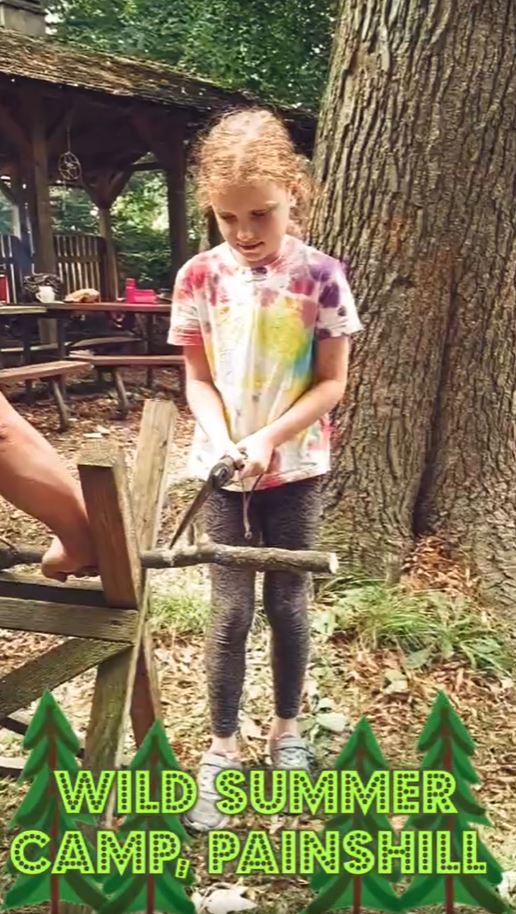
Get ready for a summer of fun with our WILD Camp, specially designed for children aged 8 – 11 years old
Our experienced forest school and bush-craft trained staff have lots of exciting adventures planned for action-packed days in nature, away from screens
Our Memory Leaves have found a home on Painshill’s newest art installation, a bespoke forged steel structure around the oak pergola. The metal appears to be rising from the ground and climbing the surround, representing our vineyard’s annual growth.
Each leaf hangs from the artwork, symbolising a loved one, a certain moment in time, or a memory. Forged from steel, each leaf stands firm against the weather, basking in the sun.
Memory leaves include
An individual vine leaf-engraved with wording of choice (up to 150 characters)
The leaf will be hung on the bespoke steel forged vine, in the beautiful Kitchen Garden. (dependent on preference).
Access to the Kitchen Garden all year round, sitting at the entrance to Painshill.
Care and maintenance of leaf throughout, spend time at Painshill.
Tickets for 2 people to visit & view the leaf when in place.
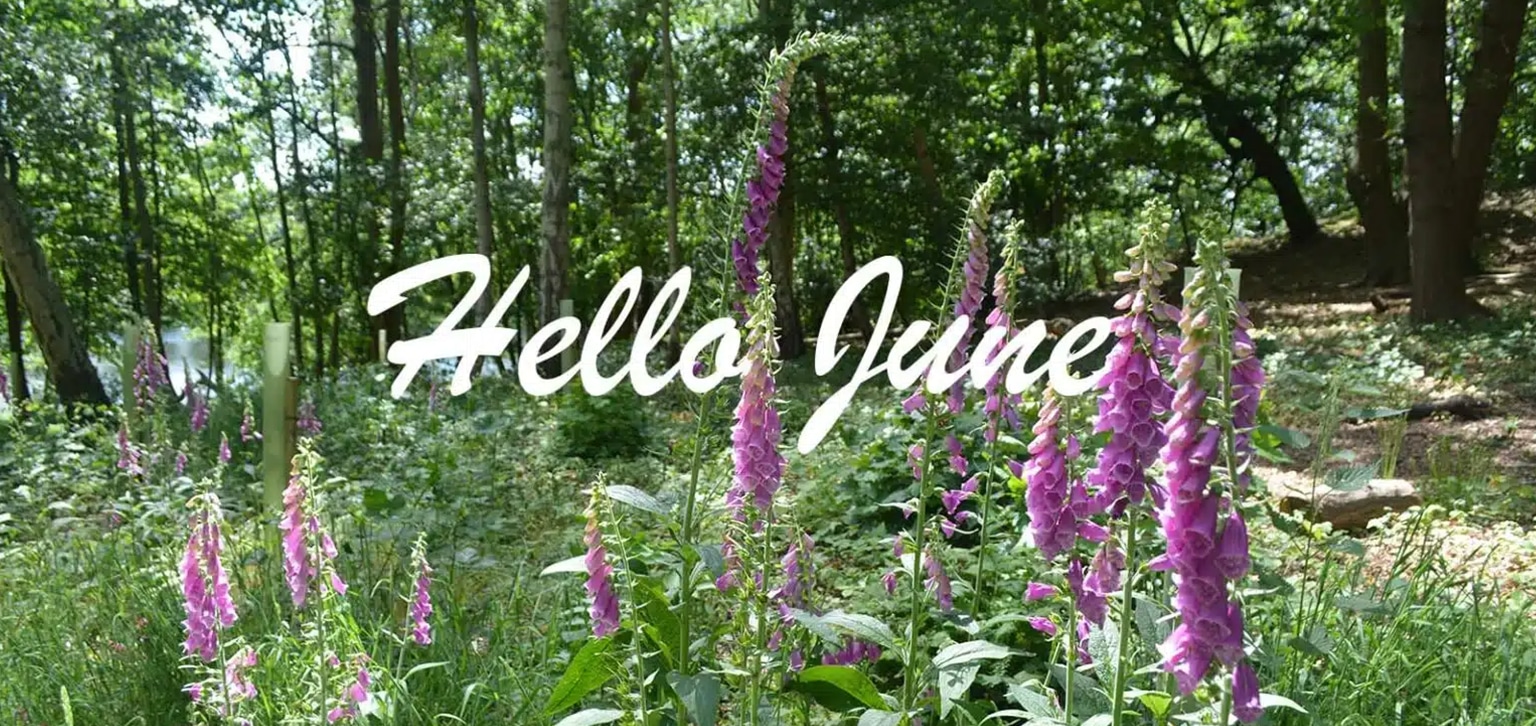
June has arrived bringing the green, enriching colours that cover the landscape. From the long grass of the meadows to the trees in leaf, the gardens feel full and busting with life as is the beautiful growing wild life.
It is also the start of our summer events programme! During June and July join us for Live Music Lates, or outdoor theatre in our Walled Garden.
Welcome to summer at Painshill 🌳
1. Live Music Lates
Thinking ahead to those warm summertime evenings; a glass of chilled bubbly in hand, listening to some incredible live music with your friends?
We have just the thing for you! Painshill’s popular Live Music Lates return for summer 2024 showcasing some of the best tribute bands around featuring:
Live music this summer
2. Bugs and Butterflies Trail
This family-friendly trail runs throughout the May half term and until to 23 June.
Become a nature explorer to find all the bugs and butterflies hidden around the Painshill landscape.
3.The landscapes new summer arrivals
It is such a great time of the year!
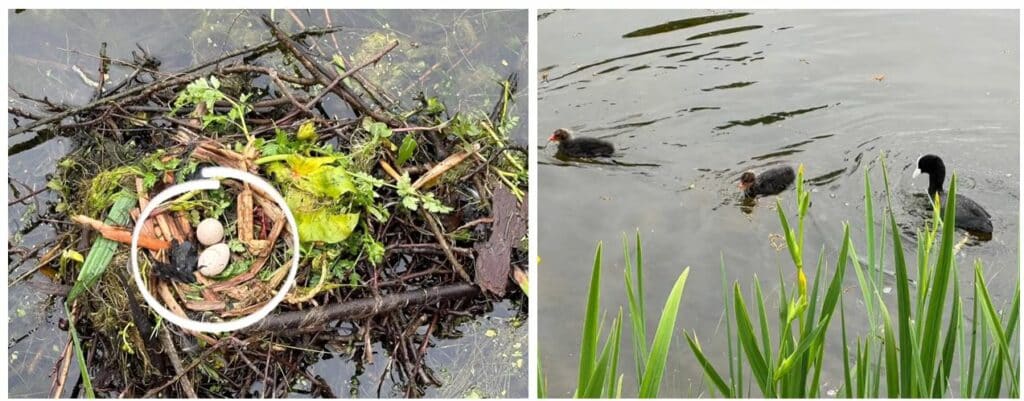
We love to see all of the new arrivals in the landscape
With Goslings, Coots and some beautifully built nests, its a very exciting time on the landscape.
4. Vegetables grown in the landscape
Did you know that vegetables grown in Painshill’s Kitchen Garden can be picked up in the Gift Shop for a small donation?
Different produce is available dependent on season. All produce is organic and no chemicals are used.
5. The Theatre has begun 🎭
This summer, outdoor theatre returns to Painshill’s beautiful Walled Garden
Join us for a balmy summer’s evening of pure joy and merriment with a varied selection of live theatre action to choose from!
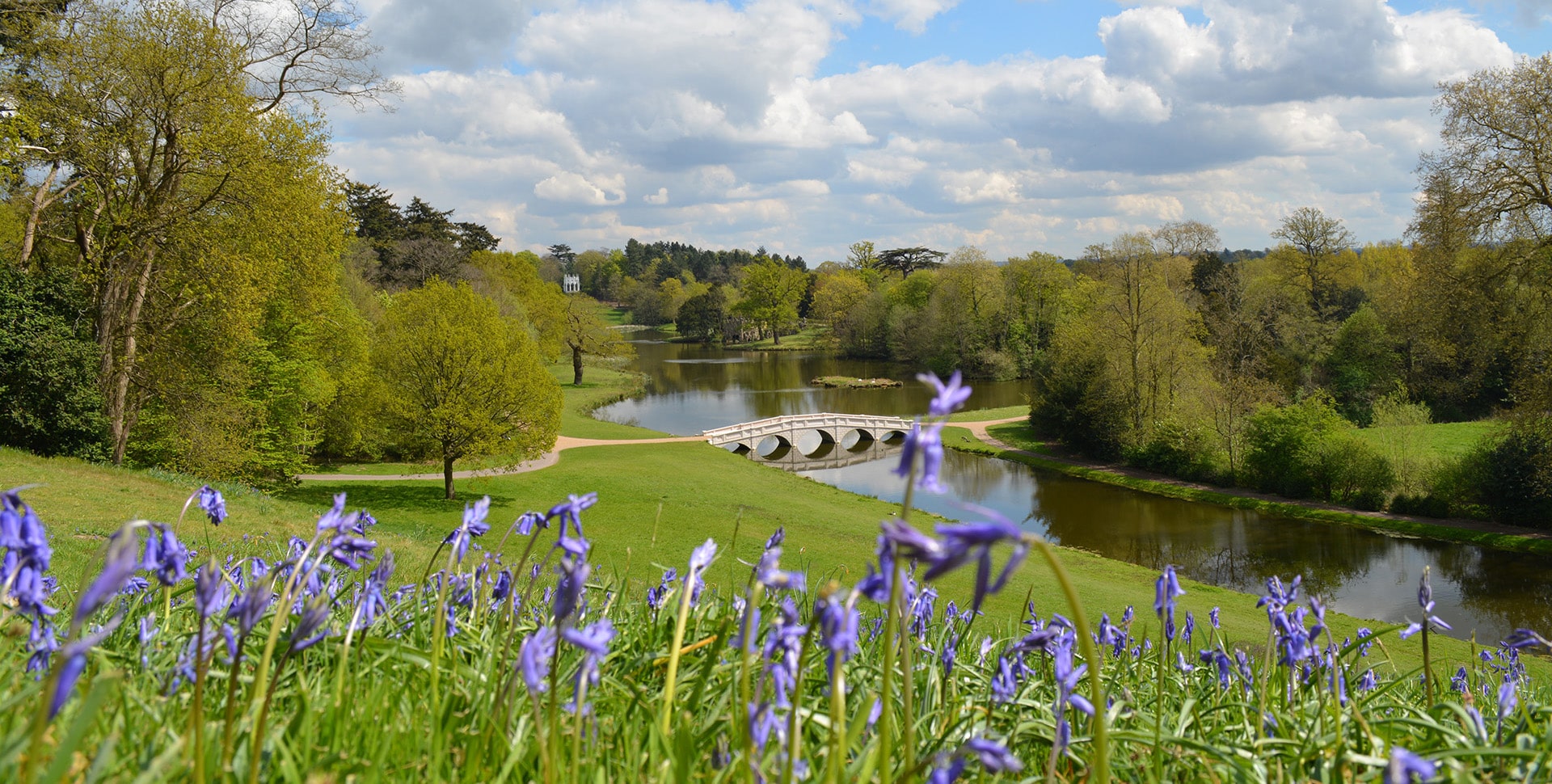
No spring would be complete without bright blooms popping up all around the landscape.
The beautiful Bluebells
The Bluebell is one of the most iconic flowers to see in April. With stunning colours through an array of violets and purples, they are a sign of warmer days ahead.
Bringing colour throughout Painshill, you can experience the landscape with soft violet hues.
Come and enjoy a little sparkle of spring. (Don’t forget to also check out our fabulous plants to buy from our gift shop!)
2. Members early morning openings return this April
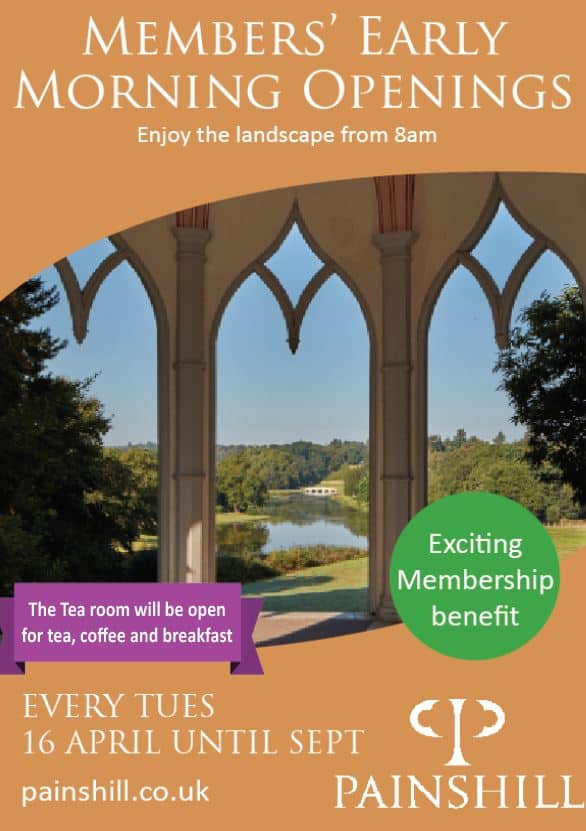
Every Tuesday, from 16th April until 27th August 2024, Painshill will open from 8am for members. Celebrate bright and fresh mornings and enjoy extended opening hours at Painshill.
Perfect for tranquil strolls, our early openings are available for Painshill Members only. Access the landscape before the general public and enjoy the garden whilst it is quiet.
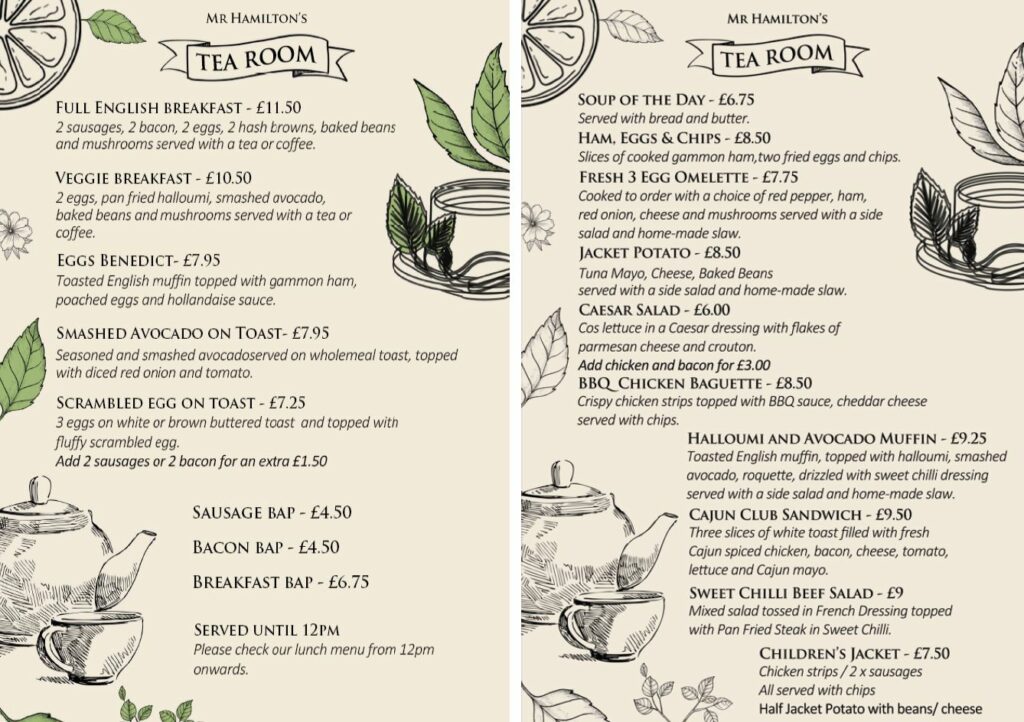
Mr Hamilton’s Tea Room will be open for tea, coffee and breakfast.
Please note: the Crystal Grotto will not be open early.
3. The Chinese Bridge – A crucial restoration appeal
Painshill Park Trust urgently needs to rebuild the Chinese Bridge. The Bridge was restored in the 1980s and, after 40 years of use, the wood is unstable and needs replacing.
We are fundraising £250,000 to urgently re-build the Chinese Bridge back to its original form so that it can be used and enjoyed by all our visitors.
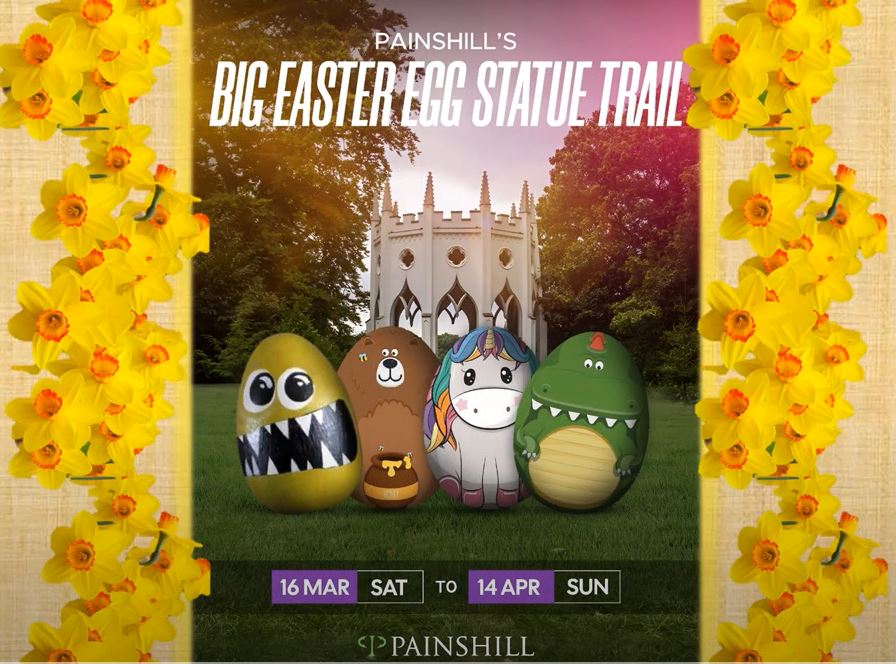
Ready for an Egg hunt? Come along and enjoy meeting some egg-cellent statue characters! On arrival there will be a trail map to guide you and help find all the all the different characters.
5. Well being and fitness – Get fit with Kate at Painshill Park
Introducing Kate’s “Trek Fit” – a unique training experience with Kate (walking with a weighted rucksack) in the beautiful Painshill landscape. This is a perfect chance to increase strength and fitness whilst making new friends.
This excellent opportunity allows you to challenge yourself and push your boundaries whilst enjoying the beautiful outdoors.
Kate’s 45-minute to 1-hour sessions are perfect for all fitness levels and abilities. The first session begins on 16 April, and the cost is just £15 per session, or only £10 for Painshill members.








 Comedy of Errors – 13 July
 Find out more and book at
 Find out more and book,