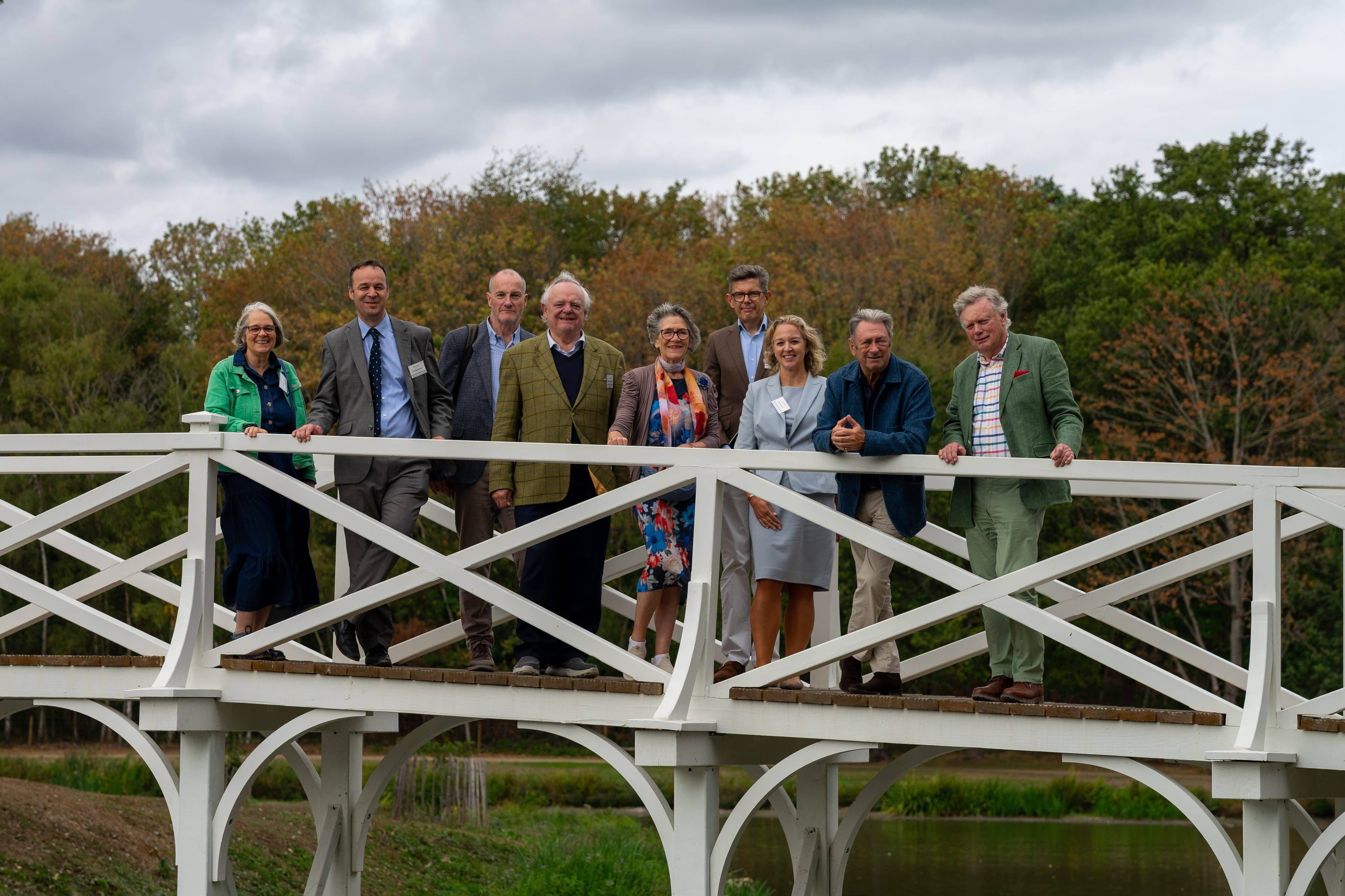
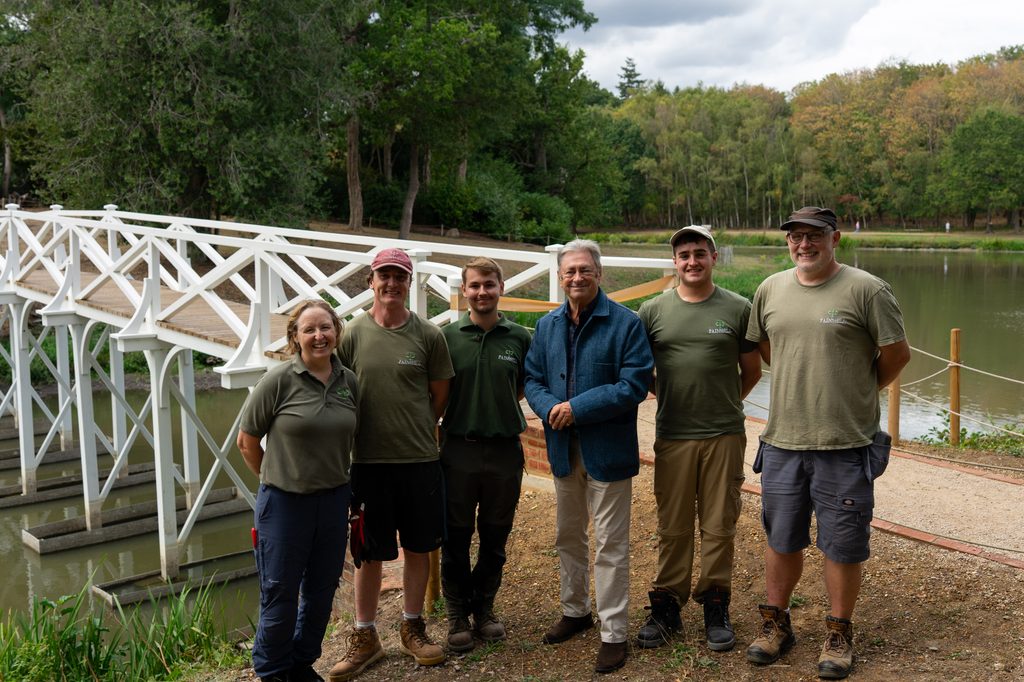
There was a real sense of celebration at Painshill as visitors, supporters, volunteers and members of the local community gathered to witness the official reopening of the historic Chinese Bridge. The occasion marked the culmination of years of planning, fundraising and skilled craftsmanship, restoring a landmark that has been at the heart of Charles Hamilton’s landscape.
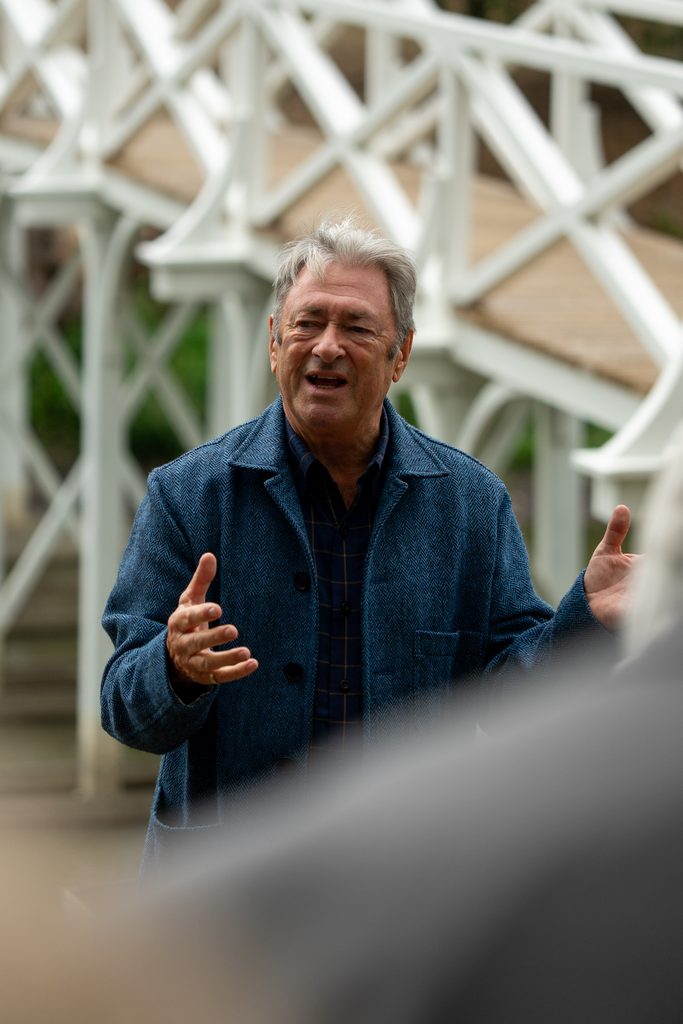
The ceremony was led by Alan Titchmarsh, renowned gardener, broadcaster and Patron of the Painshill Park Trust. Welcoming guests beside the lake, Titchmarsh spoke about the importance of preserving Britain’s historic gardens—not simply as beautiful places to visit, but as living works of art that connect people with history, nature and design.
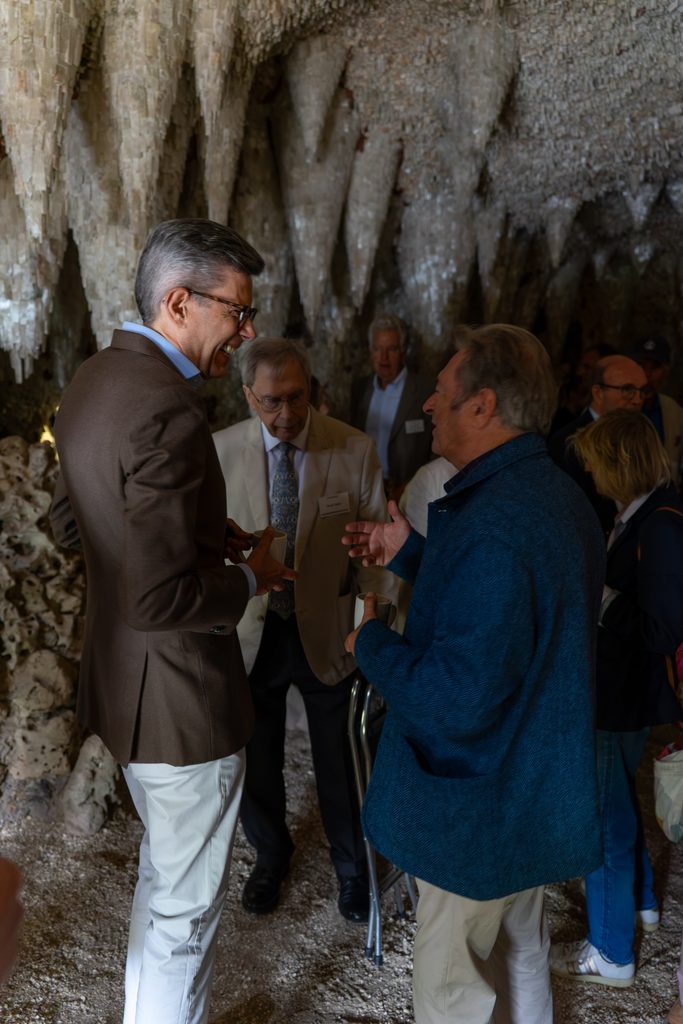
The reopening was designed as a celebration of everyone who made the project possible. Trustees, donors and local councillors came together to see the bridge returned to its rightful place within the landscape.
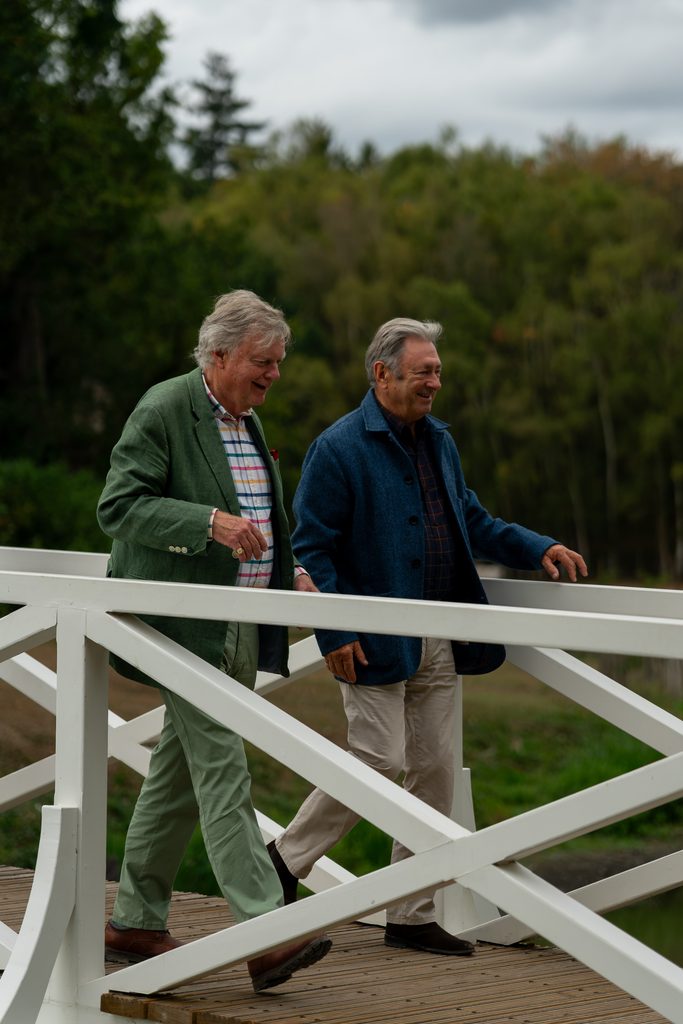
As Titchmarsh officially declared the bridge open, applause echoed across the lake and guests crossed the elegant timber structure towards Grotto Island, recreating the journey that Charles Hamilton intended in the 18th century. The completed bridge faithfully reflects the historic design while incorporating modern engineering to ensure its longevity, demonstrating how heritage conservation can honour the past while preparing for the future.
The Chinese Bridge is one of Painshill’s most photographed and recognisable features, framing beautiful views across the Serpentine Lake and providing the gateway to the Crystal Grotto. With the bridge now reopened, visitors can once again experience Hamilton’s landscape as it was conceived: a sequence of carefully composed vistas, follies and moments of surprise linked together by graceful pathways and crossings.
Alan Titchmarsh’s presence made the occasion especially fitting, celebrating not only the restoration of a beautiful structure, but the shared commitment to safeguarding Painshill’s extraordinary heritage for generations to come.
What a wonderful day we had at Painshill for Heritage Open Day!
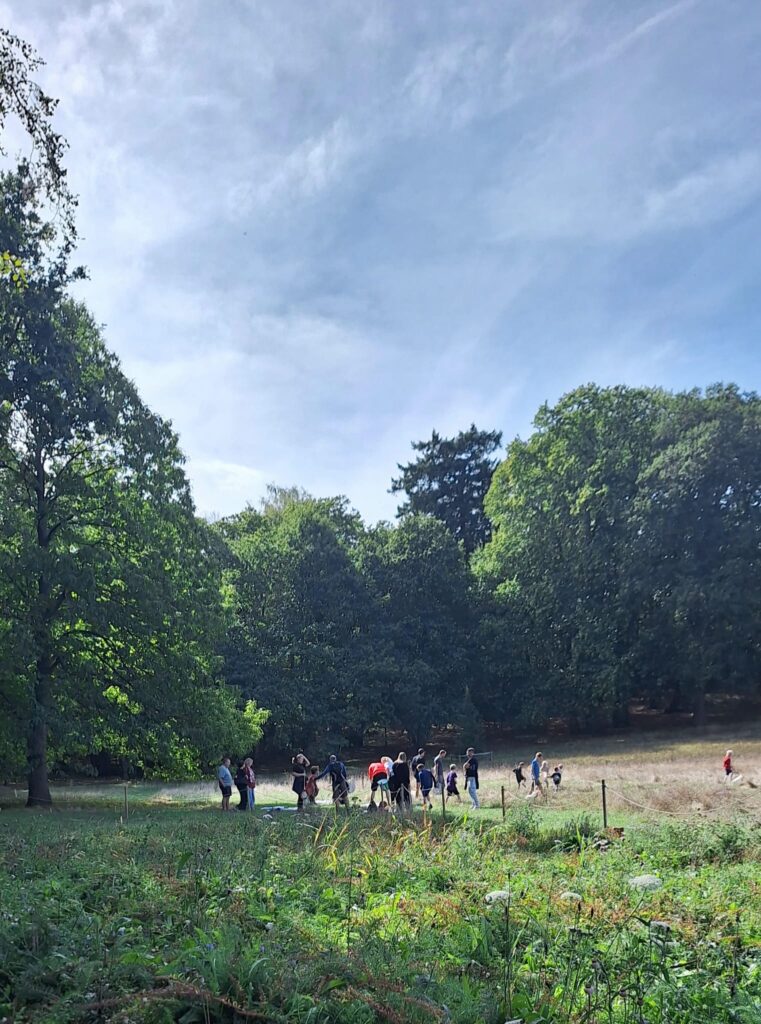
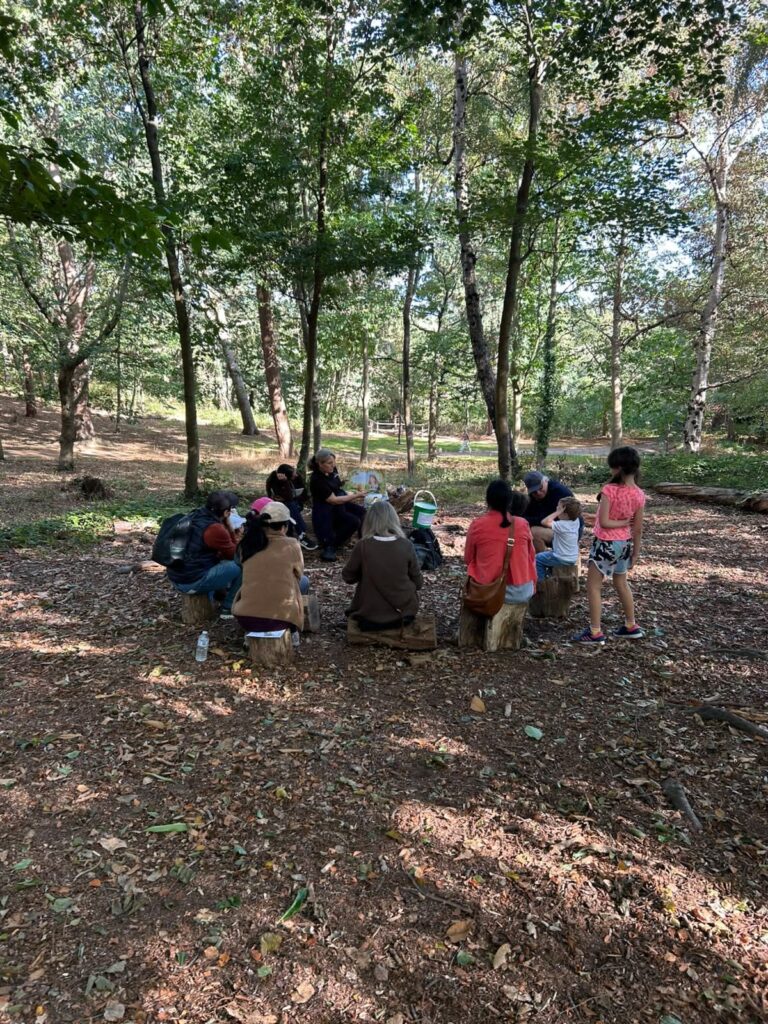
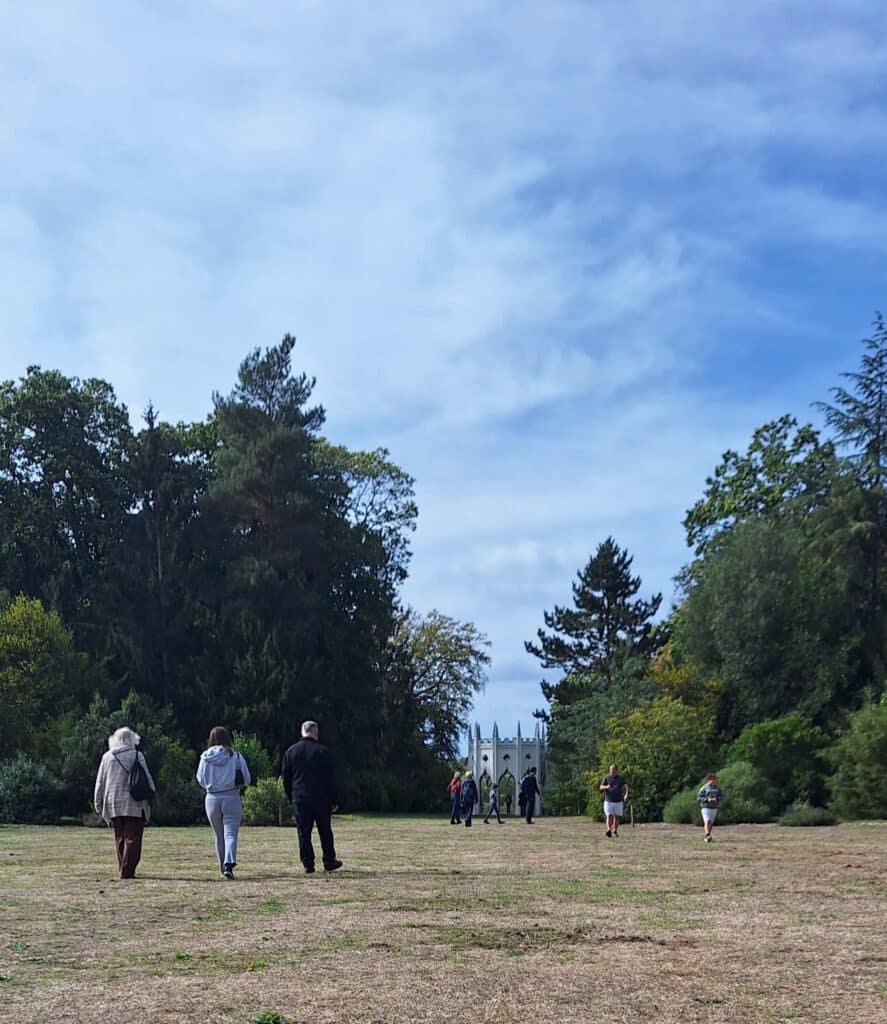
On the 20th of September, we opened our gates for a special day celebrating the history, stories and people that make Painshill such a special place. It was wonderful to see so many familiar faces, as well as lots of new visitors, enjoying the landscape and making the most of everything the day had to offer.
From exploring our beautiful 18th century landscape and discovering our famous follies, to enjoying the games, activities and stalls around the grounds, and simply spending time together in the garden, there was such a lovely atmosphere throughout the day.
Heritage Open Day would not have been possible without the wonderful people who helped bring the day to life. A very special thank you to our amazing volunteers, who gave their time, energy and enthusiasm to welcome visitors, run activities and share their knowledge throughout the day. Your support makes such a difference, and we are incredibly grateful for everything that you do.
Thank you also to our team, vendors, partners and everyone who helped with the planning and preparation. From setting up activities to making sure everything ran smoothly on the day, there was a huge amount of work happening behind the scenes, and we couldn’t have done it without you.
Most importantly, thank you to everyone who came along and celebrated with us. Seeing the garden full of families, friends, laughter and people discovering something new was a wonderful reminder of why sharing our heritage with our visitors and local community is so important to us.
We hope you enjoyed your day at Painshill as much as we enjoyed welcoming you.
Until next time, thank you for helping us celebrate the history, landscape and stories of Painshill. We look forward to welcoming you back to Painshill soon.
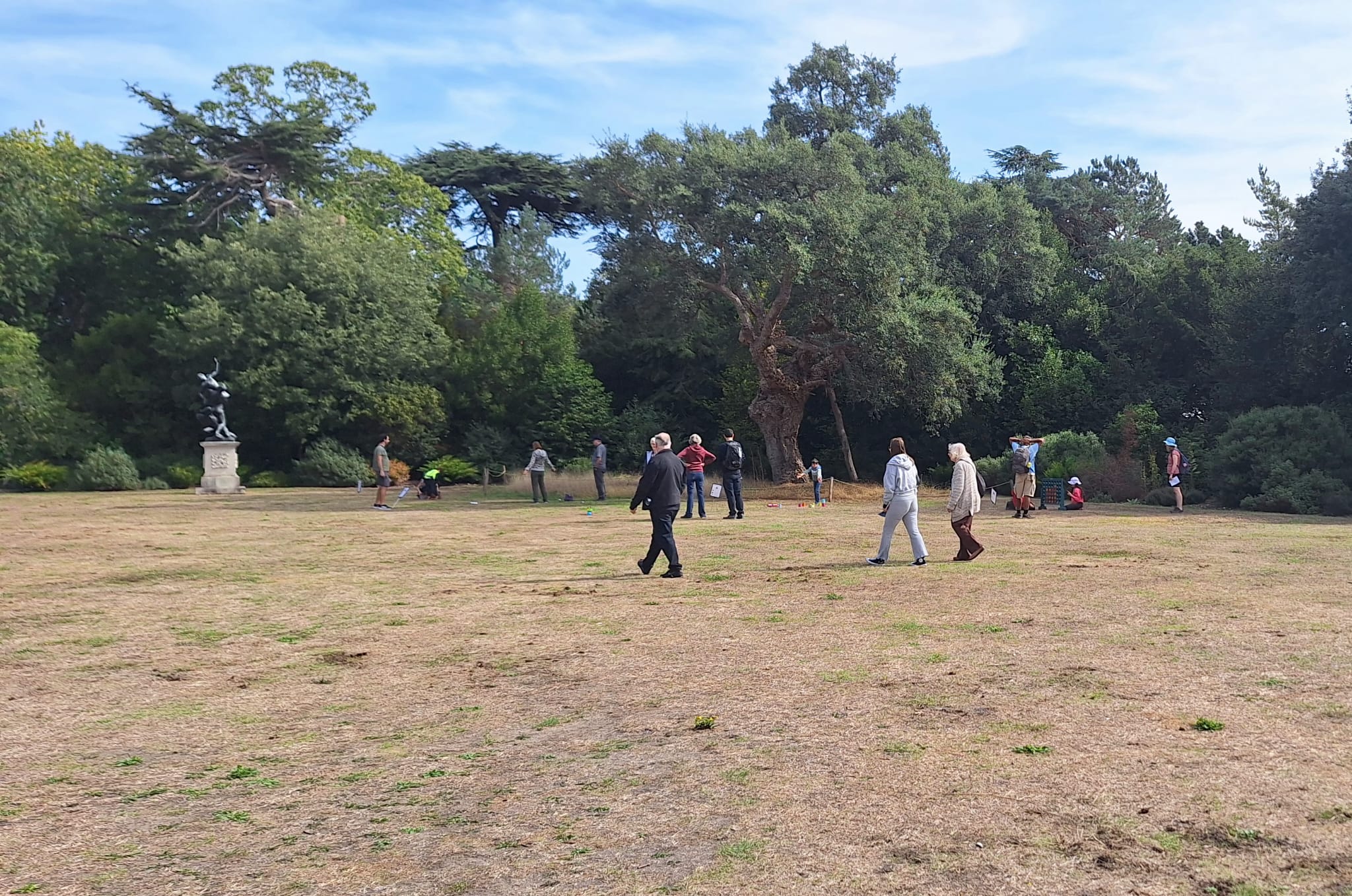
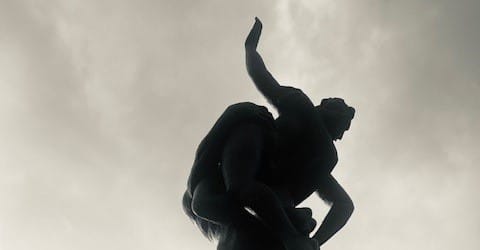
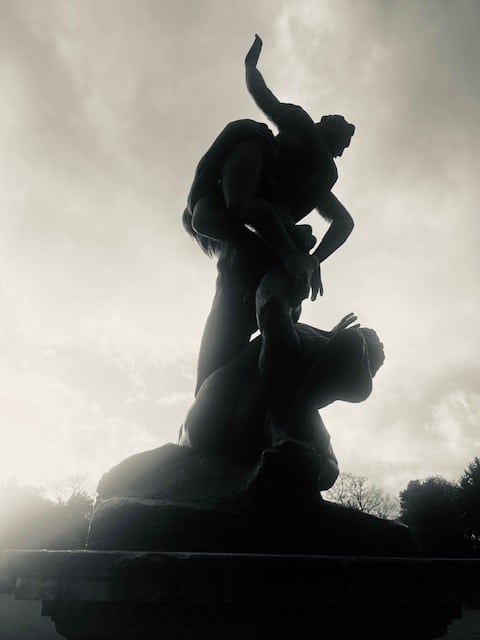
As the sun sets, light spills over a statue on the eastern boundary of Painshill’s Great Lawn. Shadows are cast over a tangle of bodies; three figures performing an ancient Roman myth. The figure at the base is a bearded older man crouching on the plinth. He throws one hand above his head in fear as a younger man overpowers him. A terrified young woman struggles in the arms of her muscled kidnapper. She represents the Sabine women; the young man is her Roman captor; the older man is her father. This scene portrays the foundation myth of Rome: The Abduction of the Sabine Women.
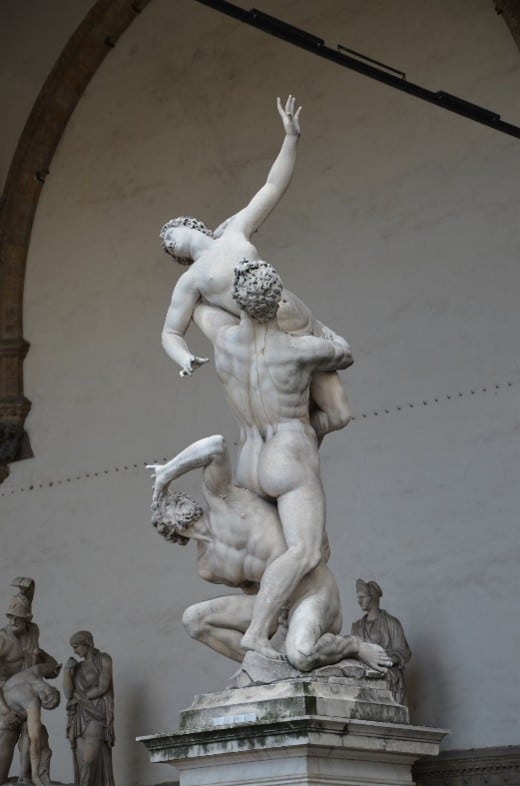
Giambologna’s Abduction of a Sabine Woman (1582). Housed in the Loggia dei Lanzi in Florence, Italy.
Hamilton’s statue was based on an original by Flemish sculptor Giambologna in Florence, around 1582. It is a masterpiece of 16th century mannerism – a style that adapted the symmetry and perfection of Renaissance techniques to create twisting, serpentine figures. The original model is currently housed in the Loggia dei Lanzi in Florence. Due to the popularity of the piece, casts were sold to buyers like Charles Hamilton in the early 1700s. John van Nost created a lead cast around 1710, and after he died, his workshop was purchased by John Cheere, who continued to manufacture these lead casts. Hamilton likely visited Cheere’s workshop to select and purchase the piece. He paid £25 for the Sabine Statue in 1763, which is a noticeable drop from the £90 Nost was quoting in the early 1700s. The price Hamilton paid is equivalent to approximately £4,400 today.
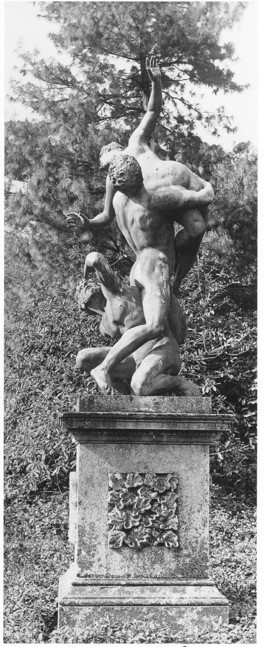
Painshill’s original Sabine statue photographed in 1904.
The Myth
According to the Ancient Romans, their city was founded by the mighty demigod Romulus. Romulus and his twin brother, Remus, were sons of the war god Mars and a Vestal Virgin named Rhea Silvia. As babies, the twin boys suckled the milk of a she-wolf and were raised by foster parents. As men, they raised an army and established the foundations of a city. However, the power balance between the brothers became uneasy. This unease grew into anger and mistrust, and eventually Romulus killed his brother, assuming sole control over his new civilisation: Rome.
However, Romulus’s problems were far from over. He had a city of soldiers; a city of only men. Without women, he knew that the civilisation he was building would die out within a generation, and so he led his men to abduct the local Sabine women. This incited a bloody conflict between the Romans and the Sabines, ending only when the women threw themselves between their Sabine fathers and their Roman husbands to stop the violence. This is the emotionally charged tale that the statue depicts.
Painshill’s Sabine statue at sunset (February, 2026)
The Mystery
The history of Hamilton’s Sabine statue becomes shrouded during the Second World War. When Painshill was requisitioned for use by the Canadian Army, Painshill’s follies were badly neglected. In fact, there were several rumours as to the fate of this magnificent statue. Some believe that it was used for target practice by the Canadian Army when they carried out training on the Great Lawn. In all likelihood, the piece was melted down and sold for lead in the early 1950s. A gentleman named Mr Waller, who started working at Painshill in 1941, remembered the statue well. In 1985, he recalled how it had been badly damaged in the winter of 1951/1952. Tragically, an arm of one of the figures had been hacked off. The owner of Painshill’s woodlands, Captain Mould, sold the statue to a merchant. There isn’t a record of who he was, but it seems that the merchant was interested in the piece for its lead content, rather than its historical value.
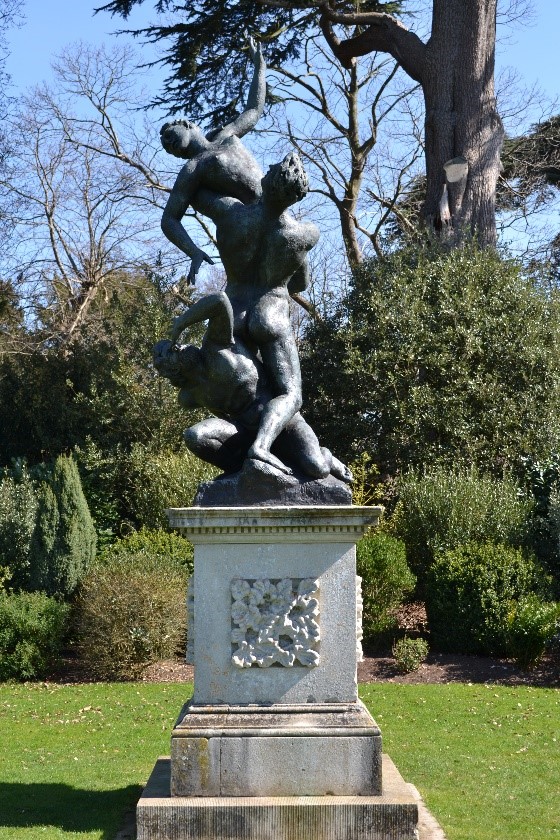
In the 1990s, efforts were made by talented sculptor Ivor Abrahams to recreate the piece for Painshill. He travelled to Florence, observing, photographing and sketching the statue in great detail. Back in England, he worked tirelessly to bring his creation to life. First creating a plaster sculpture, and eventually a bronze one that has stood on the original Portland stone foundation since 1993. The piece is not a replica (it stands at 2.6 m high compared to Giambologna’s 4.4 m) but rather an homage to the original; capturing the essence of its style, theme, and vision, and restoring the classical beauty to the Great Lawn.
Ivor Abrams Sabine statue stands on the original stone plinth on Painshill’s Great Lawn.
The Sabine statue tells a story of talent, myth, and mystery. It is an ode to the ancient world and the fortitude taken to bring Painshill back to life.
Long may it stand on its plinth, sharing the secrets of its past.
The Painshill Park Trust is pleased to announce the appointment of Huw Davies as Chief Executive Officer of Painshill Park. Huw will take up his appointment on 1 October 2026.
Huw joins Painshill following 11 years as Deputy Managing Director and Business Development Director of the Royal Philharmonic Orchestra, where he played a leading role in the organisation’s strategic development, audience growth, fundraising, partnerships and commercial activities. He brings extensive experience of leading and developing cultural organisations, building strong relationships with a wide range of stakeholders, and creating sustainable models for growth.
Sir Stephen Lamport GCVO DL, Chairman of the Painshill Park Trust, said:
“We are delighted to welcome Huw Davies as our new Chief Executive Officer. Huw has a clear understanding of Painshill’s unique qualities and of the opportunities ahead, as well as a compelling vision for its future. I and my fellow Trustees very much look forward to working with Huw as we embark on the next important chapter in Painshill’s almost 300-year history.”
“At the same time I wish to thank Painshill’s former Director, Gary Topp, and to convey thanks to Joint Interim Directors, Hannah Liles and Louise Webb.”
Huw Davies said:
“I am thrilled to be joining Painshill at such an exciting point in its history. Painshill is an extraordinary place, and one with enormous potential to reach and inspire even more people. My ambition is to build its profile, strengthen its financial resilience and deepen its impact, while protecting the integrity and character of this remarkable landscape garden for future generations.”